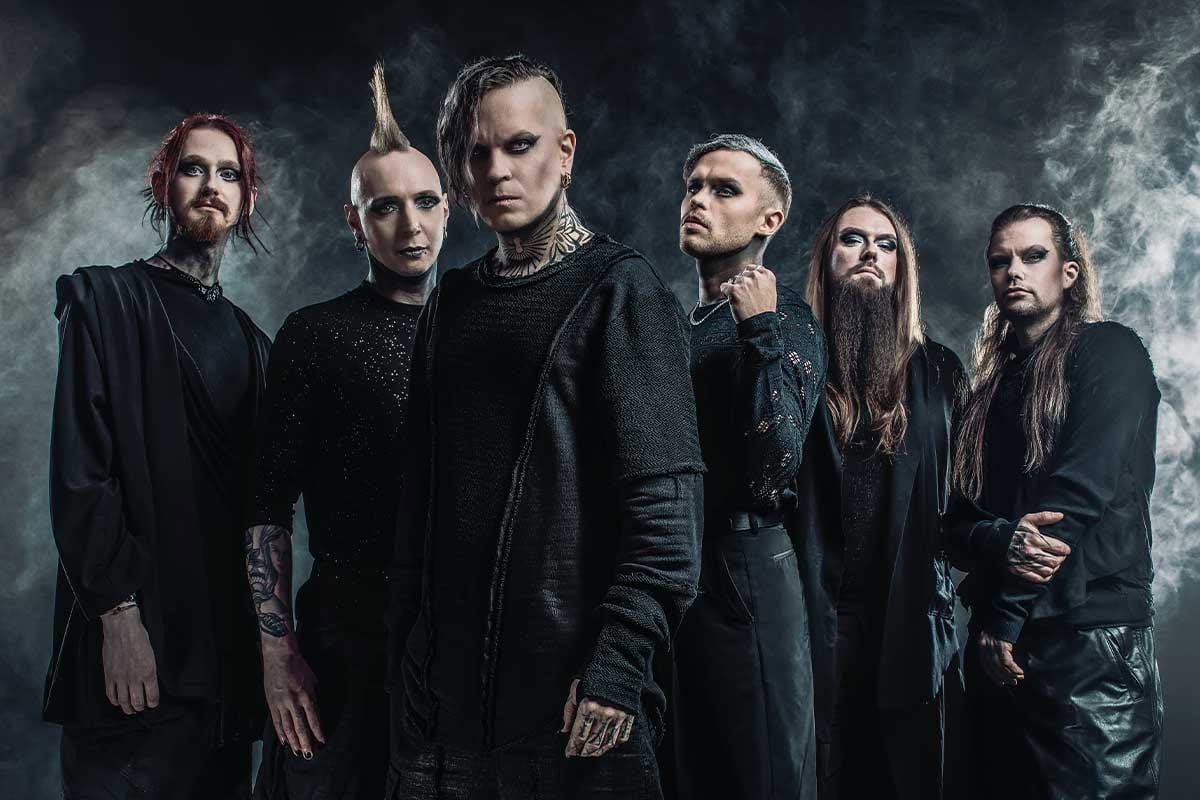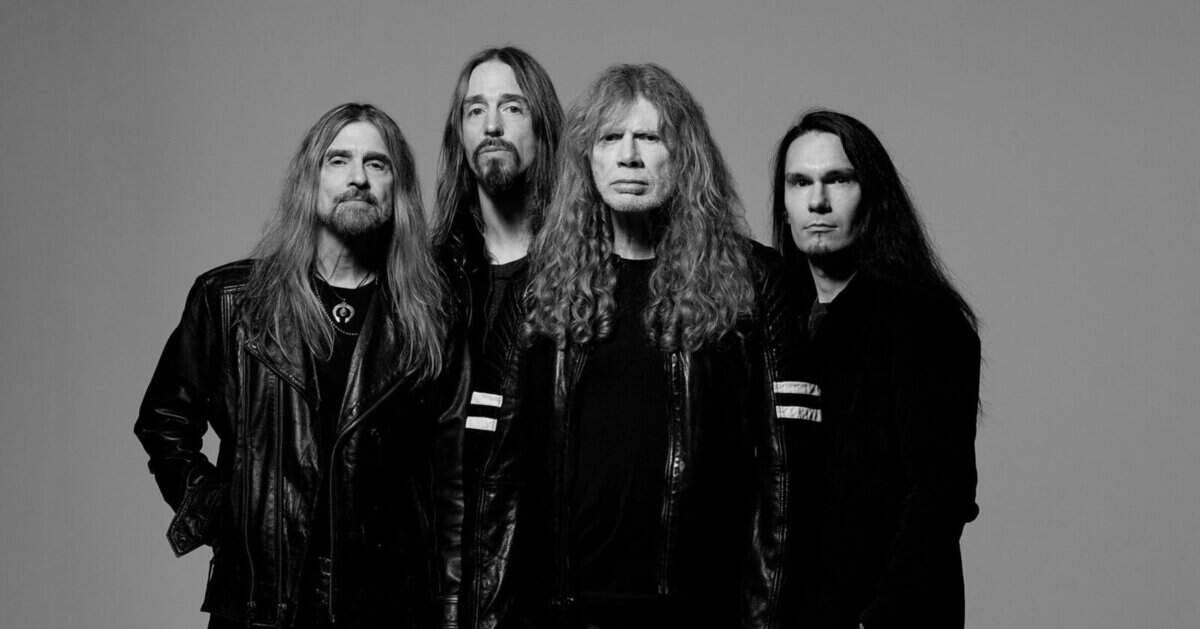
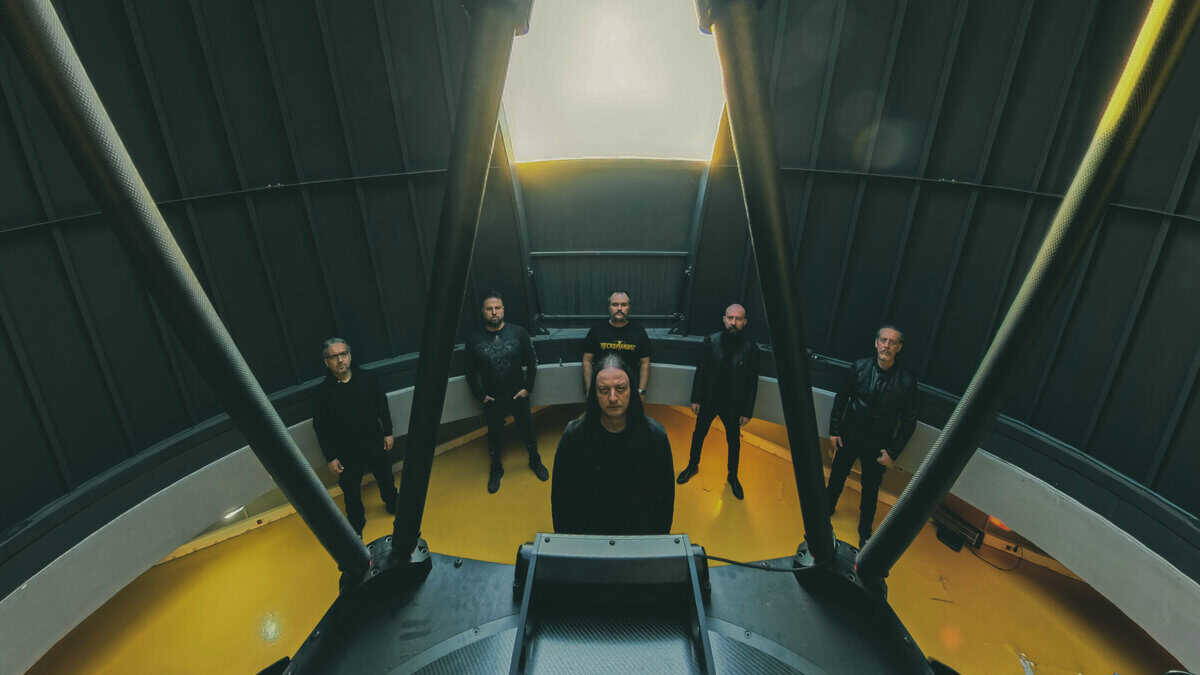
FORGOTTEN is a doom/death band from Turkey, founded back in 1995.
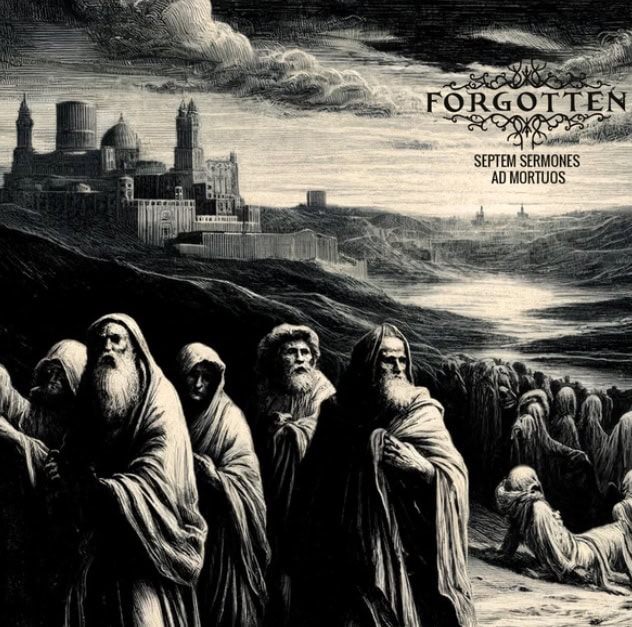
On the occasion of their new release “Septem Sermones ad Mortuous”, which was released on July 11, 2025, Joanna Gonas contacted the band, specifically founder/guitarist Tolga Otabatmaz, on behalf of Metalwar.
Read the interesting interview below!
Joanna Gonas: To start, for those who might be rediscovering your music or hearing about you for the first time, could you briefly introduce your band and the era in which you were most active?
Tolga Otabatmaz: The band was founded in 1995 by me (Tolga Otabatmaz). At first, we played epic doom death metal, using melodies that were quite different from what we use now. When we reunited in 2017, our music became darker and we stopped playing epic music. I think this was due to the personal growth we experienced during that time; I’m not sure of the exact reason.
I believe the music we make now highlights our more personal and human side, as we no longer strive to create a fantasy world in our music like we did before—instead, we are completely expressing our own realities through our music.
The most active period for us in terms of concerts was the 1990s, while the most active period in terms of production was after 2017. We released four albums after 2017, and we have now started working on our fifth album.
Joanna Gonas: What was the musical landscape like in Turkey when your band was first starting out? What niche or sound were you hoping to fill?
Tolga Otabatmaz: When we formed the band, heavy metal music was in a good place; there were lots of bands and lots of releases, concerts were frequent (I remember when there was a concert every weekend), and venues were packed at every show.
Of course, there wasn’t the same level of sound quality and organisation as there is now; everything was more amateurish, but it was done with genuine passion and had a real spirit to it. We were born into such an environment.
Our aim was never to fill a musical void; we didn’t start making music with a specific purpose in mind. I think the only void we were trying to fill was the one inside us.
Joanna Gonas: Your band name, Forgotten, evokes memory, loss, or neglect. What is something you wish people would not forget — about your music, your culture, or your country?
Tolga Otabatmaz: What I want people to remember about our music or our band is not really musical, but rather cultural. In terms of the roots of our music, we have been influenced by bands from other countries around the world, but at the same time, we make music that is rooted in this region.
This is because we were born here, and the environment and conditions here enable us to make this music. Our mood is shaped by this geography. When we look at it musically, you can see the influence of this geography on some of the melodies we write. Ultimately, we carry the heritage of the peoples who have lived and still live in Anatolia. I would like people not to forget that we are the children of Anatolia.
Joanna Gonas: Your discography shows a clear evolution over time — from your earliest releases to your most recent. (13 Martyrs (2012), through Past and Passion (2019), to Returnless (2022).) How have those shifts reflected your personal or political growth as a band, and how has performing in different cities or countries influenced your sound?” a) Are there specific tracks or albums that feel like milestones for you — not just musically, but emotionally or historically? b) Looking back on where you’ve performed — whether underground venues in Turkey or stages abroad — has any one place changed the way you see yourselves as performers or storytellers?
Tolga Otabatmaz: Our first album, 13 Martyrs, contains reworked versions of some songs from our epic doom death period. So I can say that it reflects our state of mind during our youth. Of Past And Passion, Returnless, and Septem Sermones Ad Mortuos, on the other hand, are the products of the changes we experienced after 2017, albums that are deeper in both lyrics/music and tell the story of our personal side. The countries we visit or the cities where we perform concerts,
or the concert halls themselves, don’t really affect us that much, but the music we hear there, a historical venue, or a historical text we read, of course does.
There are, of course, many albums that have been turning points and have influenced us. If I had to give examples, the
albums that come to mind that have influenced me the most are: ELOY -Ocean and Dawn, Inside, DR.SKULL-Rools 4 Fools, Black Sabbath albums in general, Pink Floyd-Meddle, Wish You Were Here, A Saucerful Of Secrets, Careful With That Axe Eugene, Metallica-And Justice For All, Led Zeppelin-Tea For One, Anatolian psychedelic rock music, Zülfü Livaneli
albums in general, etc.
Joanna Gonas: If your sound were a forgotten relic from Turkish history, what would it be — and why?
Tolga Otabatmaz: As I mentioned in a previous question, we are people who have been raised in the culture of Anatolia. Anatolian culture, as noted by the great Turkish historian Halil İnalcık, is not a culture created by a single race or nation, but rather a culture formed through the interaction of different nations and races. Therefore, from my perspective, our sound could be any relics from any period in Anatolia; I make no distinction because we are Anatolians.
But if you insist that the answer must be a relic related to the Turks, then from Central Asia there are the Orhun Inscriptions: the Kül Tigin, Bilge Khan, and Tonyukuk inscriptions, the Sühbaatar Inscriptions, the Bömbögör Inscription, the Çoyr Inscription, the Köl İç Çor Inscription, the Altun Tamgan Tarkan Inscription, the Taryat Inscriptions, the Karabalgasun Inscription, the Hüis Tolgoy Inscription, the İrtiş Inscription, the Talas Inscriptions, the Yorçı Inscription, and the Karı Çor Tigin Inscription.
Joanna Gonas: Has growing up in Turkey shaped your musical identity in ways outsiders might not immediately hear? Can you share an example from a specific song?
Tolga Otabatmaz: Yes, being born in Turkey has certainly shaped our musical identity. In fact, when you look at the reactions to our melodies, outsiders say that they belong to Anatolia, but we ourselves do not realise that the melodies we write belong here. When we are told that some of our melodies belong to this region, we say that we do not do it consciously. The first songs that come to my mind are Agony Cries, Father, and Of Past And Passion. It has been said that some of the melodies in these songs belong to Anatolia or at least evoke the melodies of this region.
Joanna Gonas: In a country with a complex political and cultural landscape, does silence ever feel more dangerous than sound?
Tolga Otabatmaz: From my point of view, remaining silent is something that only the stronger person can do. Of course, remaining completely silent, surrendering and accepting everything can make things more dangerous, but if you plan to do something, you need to understand that remaining silent is a sign of strength.
The difference between the two types of silence is “the reason why you remain silent”. Remaining silent out of fear or for your own interests can make everything more dangerous and lead to negative outcomes, while remaining silent in order to carry out your plans can lead to success.
Joanna Gonas: You have a dark, intense aesthetic. Is there any beauty or hope hidden beneath that darkness in your lyrics or sound?
Tolga Otabatmaz: Of course, hope and beauty always exist. It is not hopeless situations that exist, but hopeless people. Sometimes you may feel as though there is no hope left, as though there is nothing you can do, but you must never forget that hope and beauty are always there, hidden somewhere, watching over you.
Because life exists through its opposites, and these opposites form a whole. Therefore, there is always hope and beauty, even if hidden, in our music and lyrics.
Joanna Gonas: Do you write to express, to resist, to escape — or to confront something? How does that intention shift from album to album?
Tolga Otabatmaz: That’s a very good question, and I could write pages and pages in response, but unfortunately we don’t have enough space, so I’ll have to give a short answer. From my point of view, it’s all about confronting myself.
All people have problems, inferiority complexes, depressions, etc. that they can’t admit to anyone, but which you can understand by observing their behaviour.
This situation also affects relationships between people.
This effect is generally negative. The way to resolve this is to confront yourself and your subconscious. This psychological state I am talking about applies to me as well. Therefore, I also have problems that I don’t tell anyone about, that I don’t talk about (or talk about very little), and I feel that I confront these in the music we make.
I believe that people can heal when they confront themselves. I think acceptance and confrontation are the beginning of healing. I want to help people confront themselves through our music. For this reason, our music has started to evolve into a more psychedelic style.
Joanna Gonas: Is there a specific silence — a time, place, or feeling — that inspired your loudest track?
Tolga Otabatmaz: Of course, but when I say ‘the loudest track,’ I want to answer your question in the sense of ‘the cry of silence’ or ‘the sound of silence.’ Because sometimes the quietest can be the loudest. The track Jungian Dreams from our latest album is one of the loudest in terms of content, but musically it is one of our the softest tracks.
This track was written because of the loneliness I experienced due to a problem and the issues I could’t overcome, that is, my helplessness. Similarly, the track ‘The Man With A Kind Heart’ from the same album was also written out of helplessness, as I felt powerless to change the situation. Generally, every song has such a story behind it, but these are the first ones that came to my mind because they are from the new album.
Joanna Gonas: In an age of fast content and constant noise, how does Forgotten stay timeless rather than trendy?
Tolga Otabatmaz: In my opinion, the secret to staying timeless lies in having the courage to follow your own path.
We listen to new bands and new styles of music, but the path we follow is always the one that our subconscious dictates. Because we make music not to become famous, but to stay sane, and this mindset gives us the opportunity to be ourselves.
Joanna Gonas: If someone listened to your music in complete darkness, what kind of internal images or emotional journey do you hope they’d experience?
Tolga Otabatmaz: When people listen to our music, I want them to be able to have a sincere conversation with themselves and admit to themselves ‘why they behave this way.’ I think that embarking on an inner journey is the most important thing a person can do. We are beings who do not know who we are while we judge others, and I think this is one of the biggest problems in the world.
Joanna Gonas: Have you ever censored yourselves — musically or lyrically — for fear of misunderstanding, backlash, or self-preservation?
Tolga Otabatmaz: There is no such censorship in terms of Forgotten’s music, but our vocalist Harun and I apply self-censorship to the lyrics of some of our songs in Trenchwar, our other band that we play thrash metal. Trenchwar is a band with political and harsh lyrics, so we sometimes censor ourselves.
Joanna Gonas: What’s something you’ve unlearned as artists — something you used to believe was essential to your process or success?
Tolga Otabatmaz: There is nothing we used to do that we have now given up, but there are certainly things we have learned over time and started doing. Advertising and filming music videos were not things we used to consider very important, but we realised that advertising is important and an essential tool for sharing our feelings with more people.
As a result, we stopped not advertising the group. We also stopped worrying so much about people, thinking about what they did to us, worrying about what they thought about us or our music. I guess it’s something that comes with age.
Joanna Gonas: If Forgotten disappeared tomorrow, what part of your legacy would you hope someone uncovers decades from now?
Tolga Otabatmaz: Everyone and everything will be forgotten after a while. They will mourn you for a while because you died, they will be sad for a while because the group disappeared, and after a couple of days everyone will go back to their own lives and forget. Therefore, I don’t care what people remember or which part of our legacy people find.
For that reason, if our legacy comes to light years later, I just want people to take what they need.
On the other hand, I can’t distinguish between all the songs we’ve made, they’re like my children.