
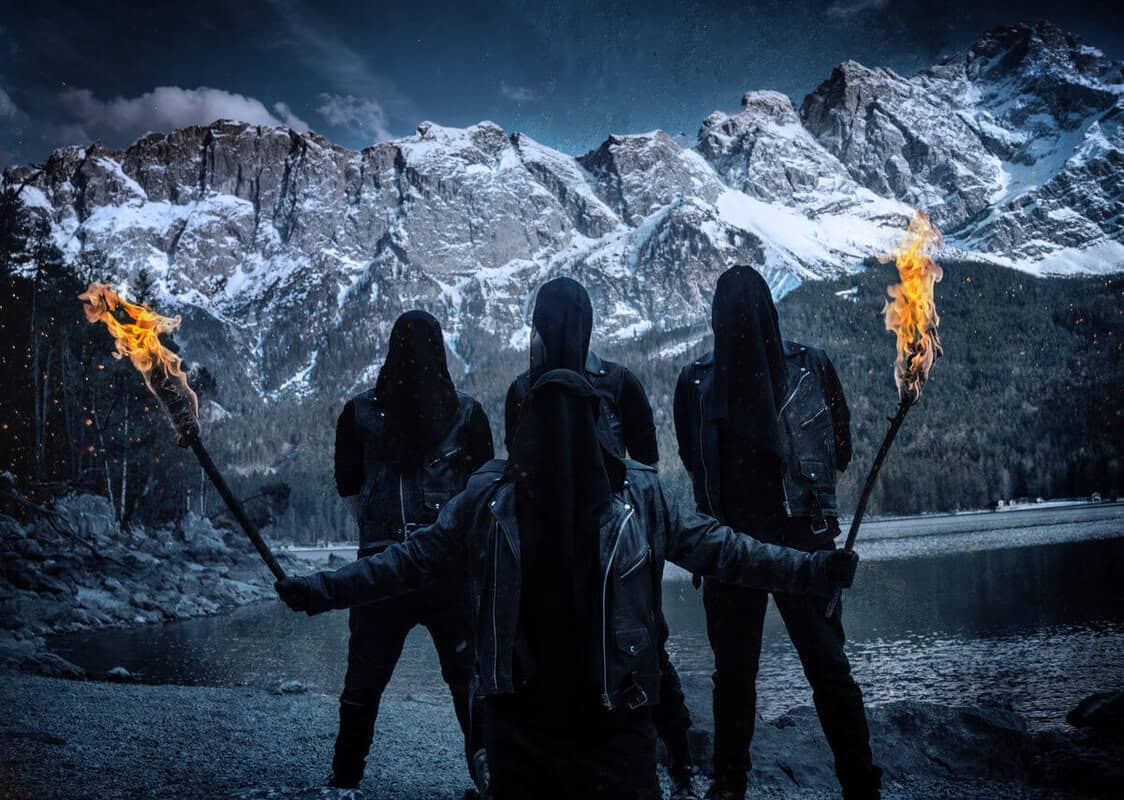
Emerging from the shadows with their intense, ritualistic atmosphere and razor-sharp melodies, Groza has rapidly evolved into one of the most powerful and unstoppable forces in modern black metal. Today, we sat down with P.G. to talk about their explosive journey and their highly anticipated return to Greece for Mammothfest!
12+1 questions
Jo: P.G., it is wonderful to connect with you again! First and foremost, the Greek underground is buzzing with excitement because Groza is returning to Greece to destroy the stage at Mammothfest 2026 in Thessaloniki! How does it feel to come back to our country, and what kind of sonic ritual are you preparing for the crowd this time?
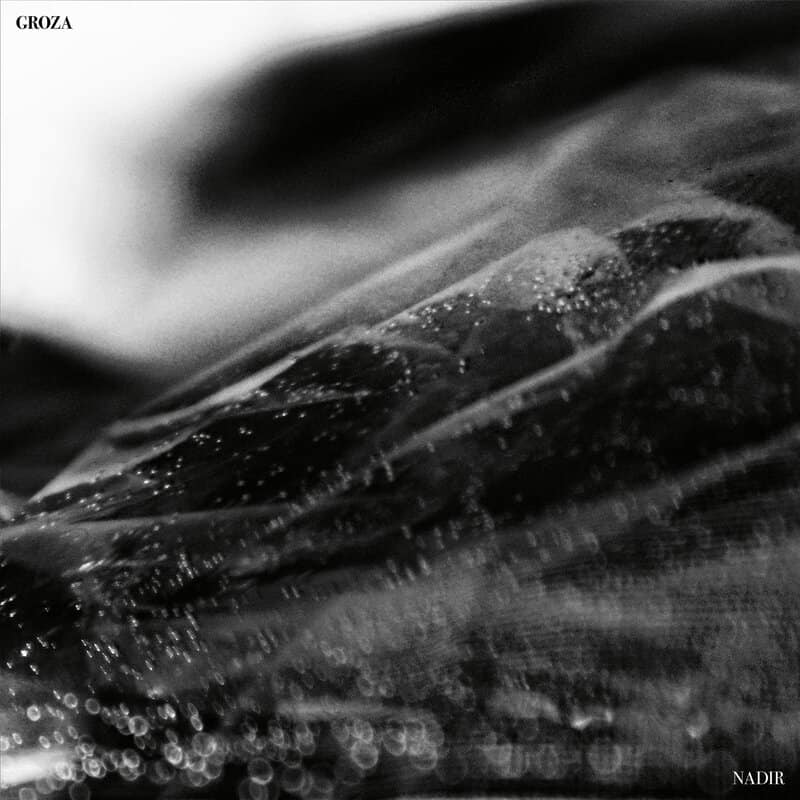
P.G.: Thanks for having me. We can’t wait to be back in Greece. Our last shows there in 2022 were really good and are looking forward very much to return. This time, we will bring some new songs from our recent album Nadir as well as older songs. We really hope to see a lot of familiar as well as new faces at
the shows.
Jo: Since your last albums like Unified in Void and The Redemptive End, the band’s growth has been explosive. You’ve been touring non-stop all over Europe. When you look back at the early days of Groza versus the massive live force you are today, what is the biggest internal shift you’ve noticed in yourselves as musicians?
P.G.: As musicians i think the biggest change you see is, that you have way more routine when playing live shows. When you play so much, you naturally develop your ability to deliver under rough circumstances, as they are on tour more often than not.
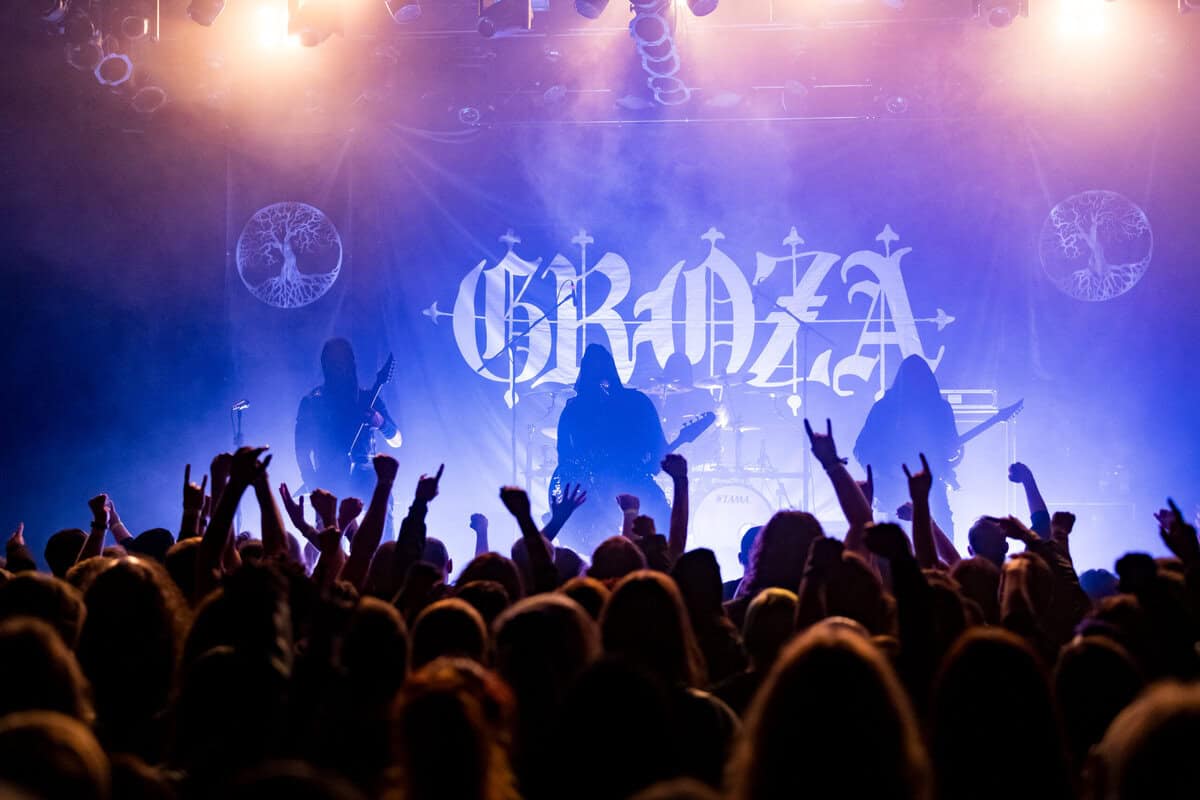
Jo: Many modern black metal bands can deliver great atmospheric studio albums, but Groza is known for translating that exact suffocating, intense atmosphere perfectly onto the live stage. How difficult is it to maintain that high-level energy and emotional weight night after night when you are on a heavy touring schedule?
P.G.: We always shoot for the best show we can deliver, no matter the circumstance. Of course, some shows are more difficult than others, but we are there to play the best show we can for the people that bought a ticket, so being tired or worn out is never an excuse.
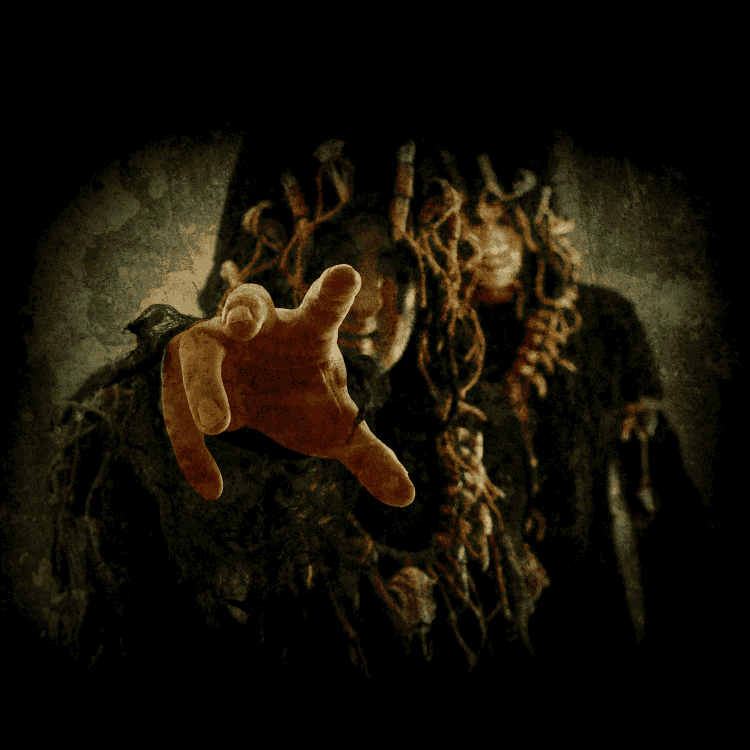
Jo: Your visual identity—the shrouded faces, the black hoods, the anonymity on stage—is a huge part of the Groza experience. Some musicians say that wearing a mask or a hood restricts them, while others say it liberates them, acting like an armor. For you personally, what happens to P.G. the moment the hood goes on before a show?
P.G.: You just disconnect yourself from the private version of yourself an become one with the collective and band. Since we all look the same, it also enhances the sense of being one unity instead of 4 guys on stage.
Jo: Let’s talk about the songwriting process. Your music beautifully balances fierce, blasting black metal with incredibly melancholic, almost uplifting melodic guitar hooks. When you sit down to write, do these melodies come from a place of anger and frustration, or is it more of a therapeutic, healing process for you?
P.G.: It can come from different places but almost exclusively negative spaces. GROZA has always been a way to get that negativity out of my system, so it’s a thing I do always, when I have something to process in my mind.
Jo: A lot of critics and fans initially compared Groza to bands like Mgła. However, over the years, you’ve clearly carved out a completely unique, distinct identity. Do you feel that the endless touring and the chemistry of the current lineup have finally put those old comparisons to rest?
P.G.: I think that through playing a lot of shows, we have proven to many of the people that initially put us in that box, that we are sincere in what we do and that GROZA is 100% about passion and love for the music and not about fame or money, as some had assumed back in the beginning of the band.
Jo: Being on the road for months can be a wild ride. If you had to pick one specific, surreal, or completely bizarre moment from your recent tours that made you stop and think, Yep, this is the black metal touring life, what would that be?
P.G.: I could not pick a single one. There are too many that come to mind. But what blows my mind most are the super dedicated fans, sometimes they wait outside the venue for hours or bring us gifts and stuff like that. It never stops to amaze me how dedicated these people are. We never take it for granted.
Jo: Black metal has traditionally been a very rigid, stubborn genre with many unwritten rules. Groza, while staying true to the darkness, feels very modern and fresh. What is your opinion on the current state of the global black metal scene? Is it evolving in the right direction, or is it getting stuck in old cliches?
P.G.: I don’t think about that much and also don’t really consider GROZA part of a scene. Everybody has different definitions of what Black Metal is supposed to be and to some, GROZA does not meet their requirements to be “worthy” to be called Black Metal. I really don’t care though, we don’t want it to
be put in a box, we just make music that moves us and that we can stand 100% behind. We don’t do it for other people, so it’s not of my concern what people in the scene think about it afterwards.
Jo: If the music of Groza was a soundtrack to a specific movie, book, or a real-world historical catastrophe, which one do you think would fit the atmosphere of your songs perfectly?
P.G.: Difficult question. Many catastrophes of the world and the mind have inspired and continue to inspire GROZAs topics and music, so choosing one is almost impossible.
Jo: You are sharing the Mammoth fest lineup with some incredible acts, including the absolute legends Carcass. If you could secretly steal one song from any other band playing at the festival and black-metal-ize it Groza-style, which song would you pick to cover?
P.G.: Shallow Graves by Dödsrit, without a doubt.
Jo: We know that a touring musician’s life is filled with sleepless nights, gas station food, and heavy gear. What is the one non-musical, completely ordinary item that you absolutely MUST pack with you on every tour, without which you would lose your mind?
P.G.: Headphones. They allow me to escape any noisy situation and separate myself from my surroundings when things get too overwhelming and loud.
Jo: Looking ahead after Mammoth fest and the summer festival run, what is the next major milestone for Groza? Are there any secrets or early details you can share with us regarding new music or studio sessions?
P.G.: We are in the writing process of the new album right now. Not far enough so I could tell you more, but we hope to spend the rest of the year finishing writing it, so we can record and eventually release it next year.
Jo: [The +1 Bonus, Weird Quirky Question]: Since your stage performance relies heavily on your iconic black hoods and masks, have you ever had a nightmare scenario mid-show where a hood slipped completely over your eyes, leaving you completely blind in front of hundreds of fans, or perhaps accidentally inhaling your own stage fog? How do you survive the visual hazards of black metal styling?
P.G.: Both scenarios happen at every GROZA show. The chaos comes with the territory, but with time, you learn to deal with it and not see it as an obstacle, but actually something that fuels the energy of the show with its unpredictable energy.
Jo: Thank you so much, P.G., for taking the time to do this interview and for your constant support! It is always an absolute pleasure catching up with you. We wish you and Groza an incredible festival season, and we absolutely cannot wait to see you tear it down at Mammothfest in Thessaloniki! Have a killer show!
P.G.: Thank you, cheers!
Interview – Text: Joanna Gonas

No comments yet. Be the first to comment!