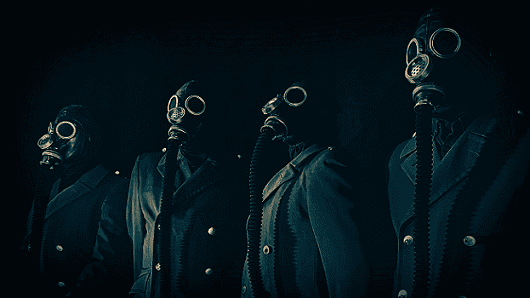
“From the dark heart of Gothenburg, Sweden, Lömsk returned with ‘Act II – Of Iron and Blood’ to seal their nihilistic narrative. At Soundstoriesbyjo, metalwar.gr, we dive into the ruins of their sound for a conversation full of iron and blood. Here are our questions to the band:”
Jo: Welcome back. “Act II – Of Iron and Blood” is set to be released on March 6, 2026. While Act I felt like a journey through creative destruction, this new chapter feels like it’s born directly from the ruins. How did the mindset of the band shift between these two “Acts”?
Lömsk: After the recognition and attention we received from Act I, we felt a strong need to strike while the iron was hot. We already had a lot of material to build from, so there was a clear urgency to get back out there with a new album.
With Act I, we had all the time in the world to write, record, and release. This time, the process was more intense and focused. We pushed ourselves further in both songwriting and production, and we raised our ambitions when it came to the visual side, the cover art, layout, videos, and band photos.
It’s definitely been a more driven and demanding period, but that intensity really shaped what Act II became.
Jo: Being from Gothenburg, the world usually expects a specific melodic sound. However, Lömsk brings a much darker, nihilistic black metal atmosphere. Is your music a reaction against the “polished” legacy of your city’s scene?
Lömsk: I wouldn’t say it’s a reaction against the Gothenburg scene at all. We simply write and produce the kind of music we want to hear ourselves. The darker, more atmospheric music comes naturally to us.
We have a lot of respect for the “Gothenburg sound” and the legacy it carries. It’s an important part of the city’s musical identity. But every band has to find its own voice and this is ours.
Jo: The title of the new album suggests a very visceral and violent theme. Does “Iron and Blood” represent a historical reflection or a metaphorical view of the modern human condition in 2026?
Lömsk: It’s definitely more of a metaphor than a historical reflection. Iron and Blood represents personal experiences — suffering, trauma, inner conflict — but also a broader reflection on society and the world we’re living in.
There are themes of war, both internal and external and a sense of rage and anguish that feels very present in our time. The title captures that weight and intensity more as an emotional and existential state than as a direct reference to history.
Jo: You have maintained a level of artistic anonymity. Does hiding the human faces behind the music help the listener focus more on the “insidious” (Lömsk) nature of the compositions themselves?
Lömsk: We want the music to be the main focus and to create an otherworldly experience around it. There’s nothing wrong with four guys in t-shirts and jeans but for us, that’s not the point.
Black metal has always had an element of theatre and drama, a sense of mystique and atmosphere beyond just the songs themselves. Maintaining a level of anonymity is our way of embracing that tradition. It helps to shift attention away from personalities and toward the mood, the compositions, and the nature of the music itself.
Jo: In tracks like “Fields of Elysium”, there is a constant tension between melody and chaos. How do you balance these two elements in the rehearsal room? Is it a democratic process or a singular dark vision?
Lömsk: It’s not a singular dark vision, but it is a coordinated one. We don’t usually write in the rehearsal room, that space is more about capturing the right feel. Our experience is that playing a song and listening to a song can be two very different things, and we’ve chosen to prioritize the latter.
The writing process is separate and quite meticulous. We produce detailed demos and send them back and forth, refining arrangements and structure until the songs feel complete. Often, we go through pre-production long before we even properly learn to play the material as a band.
Jo: You are releasing this album through Vendetta Records, a label known for its high-quality underground aesthetic. How has this partnership helped you achieve the specific “raw” production you were looking for in Act II?
Lömsk: Vendetta has been essential in helping us bring this release to life. They’ve supported us in everything from printing and distribution to connecting us with the right promoters.
Most importantly, they understand our vision and respect the aesthetic we’re aiming for. That trust has allowed us to maintain the raw and uncompromising production we wanted for Act II, while still ensuring the album is presented with the quality and care it deserves.
Jo: The artwork and the overall visual presentation of Lömsk are very striking. How involved is the band in the visual storytelling, and how does it connect to the lyrics of the new songs?
Lömsk: We’re very involved in all aspects of the visual representation and have directed that side of the band from the very beginning. While we collaborate with artists and commission professionals for the cover art and layout, we’re closely involved throughout the entire process.
It’s important to us that everything stays true to our vision. The visuals aren’t separate from the music, they reflect the same themes and atmosphere as the lyrics, helping to create a cohesive and immersive experience around the album.
Jo: Black metal has evolved into many sub-genres. Where do you see Lömsk fitting in today’s scene? Do you feel more connected to the “old guard” or the new wave of atmospheric extremity?
Lömsk: We definitely feel a strong connection to the old guard. We all grew up listening to the second wave of Norwegian black metal and that foundation is deeply rooted in what we do.
At the same time, our approach might lean more toward a newer school of thinking, perhaps even touching on post–black metal in terms of atmosphere and structure. But we don’t spend too much time trying to define where we fit. We focus on making music that feels honest to us, and the rest can be labelled however people choose.
Jo: You’ve announced some select dates through Aeternum Concerts. How difficult is it to translate the suffocating atmosphere of the studio recordings into a live physical experience?
Lömsk: We hope we’re doing a good job translating it, but of course it’s hard to judge when you’re on stage. We’re constantly evolving how we approach live performances.
From early on, we’ve incorporated backing tracks into our shows. Some purists might frown upon that but we never use them to replace what we play. Instead, they enhance the experience, bringing elements like samples and orchestral layers to the audience and helping capture the full atmosphere of the studio recordings.
Jo: The Greek underground scene has a deep and long-standing appreciation for the Swedish black metal darkness. Have you felt this strong support from the Greek fans so far, and is there a desire from your side to finally bring the “Of Iron and Blood” ritual to Greek soil during this new tour cycle?
Lömsk: We’ve definitely felt strong support from fans all over Europe, Greece included. Playing a show in Greece would, of course, be amazing.
Right now, 2026 is almost fully booked for us, but we’re already starting to look toward 2027. If the opportunity arises, bringing the Of Iron and Blood ritual to Greek soil is something we’d love to make happen.
Jo: In an era of fast, digital consumption and fleeting trends, how vital is it for a band like Lömsk to maintain a more “traditional” and raw connection with the underground scene? Do you feel that the true essence of Black Metal can only be preserved through these deeper, more dedicated channels of communication?
Lömsk: I think Black Metal is still very much a grassroots community. Today, instead of trading tapes and letters, it’s more about posts on niche forums and promoters sharing links and uploads.
This isn’t music for anyone chasing fame or a rockstar lifestyle. But that’s part of its strength — it creates a deeper, more meaningful connection with fans and the scene, preserving the true essence of what Black Metal has always been.
Jo: Looking back at the transition from “Act I” to the visceral world of “Act II – Of Iron and Blood”, do you feel that this cycle is now complete, or is the “insidious” spirit of Lömsk already pointing towards even darker and more experimental territories for the future?
Lömsk: We don’t really know what the future holds. Right now, our focus is on touring and performing live for a while. When the time comes, we’ll start writing the next chapter but what that will sound like, or how dark and experimental it might get, is still uncertain.
Jo: To close this “Sound Story”, what is the ultimate message you want to leave for those who are about to enter the world of Iron and Blood?
Lömsk: Of Iron and Blood is meant to be experienced as a complete package — a carefully crafted journey for the listener. The best way to take it in is from start to finish: listen closely, immerse yourself in the artwork, read the lyrics. The old-school way. Dust off that record player and dive in.
Our conversation with Lömsk was a deep dive into the heart of modern Swedish nihilism. With ‘Act II – Of Iron and Blood’ (March 6, 2026) foretelling a new era of sonic destruction, the band from Gothenburg proves that true Black Metal remains an insidious and uncompromised force. It was a true honor for Soundstoriesbyjo and Metal War to host their dark vision. We deeply thank Lömsk for their trust and their raw honesty.
Interview – Text: Joanna Gonas