
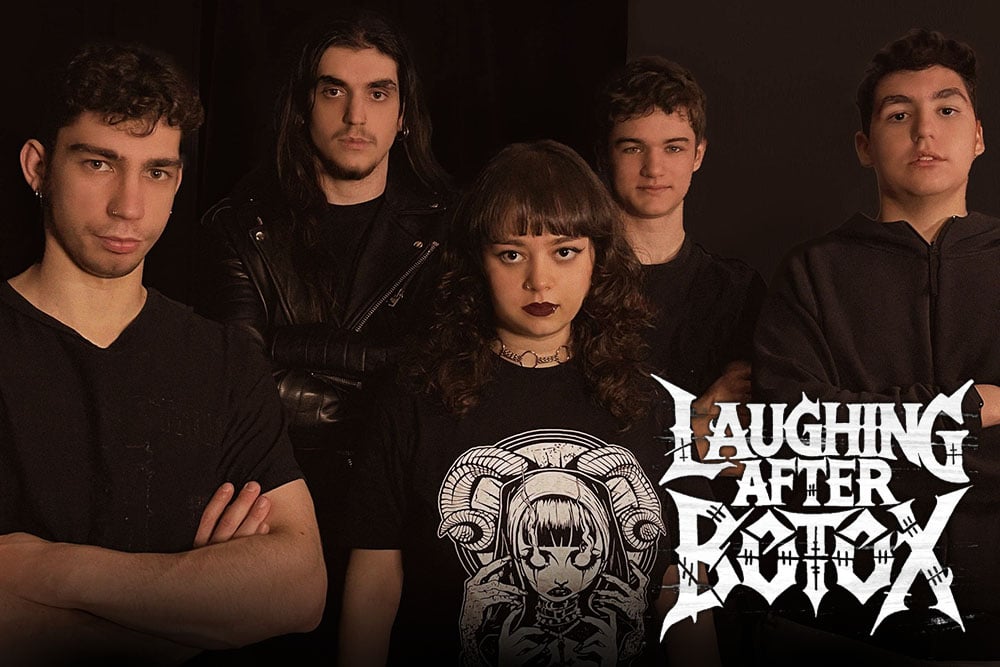
LAUGHING AFTER BOTOX are one of the most exciting new additions to the Greek progressive metal scene. On the occasion of the release of their debut EP, “Perception of Insanity”, we spoke with the band’s guitarist, George Theodoropoulos, about the formation of the band, their musical influences, their songwriting process, and the challenges of being a new band emerging from the Greek provinces.
Metalwar: Hello George! Welcome to Metalwar.gr. To begin with, could you introduce yourself to our readers and tell us a few things about LAUGHING AFTER BOTOX?
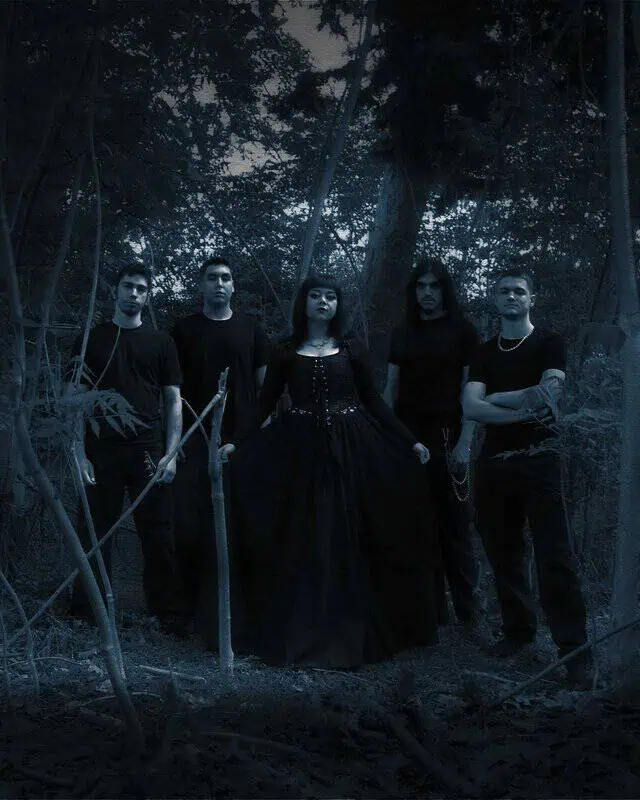
George Theodoropoulos: Hello! Thanks for having me. We’re a five-piece band from Larissa, Greece. On drums we have Vasilis Theodoropoulos, my younger brother, Dimitris Emmanouilidis plays bass, Tasos Daglis is on second guitar, Chrysa Lappa handles the vocals, and I play guitar.
Metalwar: How did LAUGHING AFTER BOTOX come together?
George: Everything started around Easter 2024, when VOID DROID came to Larisa looking for a local support act. We put the band together specifically for that show, with absolutely no intention of continuing afterwards.
Around the same time, I had finished writing a song that, for the first time, genuinely felt like my own. It was the first composition I was completely confident about, without feeling that I had unconsciously borrowed ideas from somewhere else. During our first rehearsal, the chemistry was immediate and the song worked incredibly well. After that first live show, we simply looked at each other and thought, “Why not? Let’s see where this can lead.”
Metalwar: So the band came together quite naturally.
George Theodoropoulos: Exactly. There was never any pressure to prove anything. None of us had planned on starting a new band. Most of us were already involved in other projects, so LAUGHING AFTER BOTOX evolved very organically.
Dimitris also plays bass in another local band with a sound closer to LAMB OF GOD. At that point I hadn’t yet joined FADING ECHOES, but interestingly both bands more or less emerged around the same period. Everyone already had another musical outlet, so in a way LAUGHING AFTER BOTOX started as everyone’s side project.
We often joke that the band came together like the characters in the Greek TV series Para Pente—five random people simply ended up in the same place at exactly the right moment.
Metalwar: Your band’s name is certainly one of the most unusual we’ve come across. How did you come up with it?
George Theodoropoulos: I’ve always liked band names that sound more like song titles than a single word, similar to many metalcore bands such as HEAVEN SHALL BURN or AS I LAY DYING.
The inspiration came completely by accident. I was watching an interview on television with two women who had undergone Botox treatments. They were laughing, but their faces barely moved. It almost looked as if the programme had been dubbed because their expressions didn’t match what they were saying.
That contrast stayed with me. In trying to become more beautiful, they had lost one of the most beautiful human expressions—the smile itself. The image of someone laughing without being able to truly smile inspired the name Laughing After Botox. It tells a small story and, at the same time, has a touch of irony and humour.
Metalwar: How would you describe your sound to someone hearing LAUGHING AFTER BOTOX for the first time?
George Theodoropoulos: Most people describe us as progressive metal. I’m not a huge fan of labels, but they do help listeners form an initial impression.
We’ve also been described as alternative metal, and I’ve even heard people refer to our music as “cinematic,” which I really liked. I think our songs have a strong theatrical element and tend to create vivid images in the listener’s mind.
That said, I consider it a huge compliment whenever someone calls us a progressive metal band, because the word “progressive” suggests that your music is actually pushing the genre forward rather than simply repeating what’s already been done.
Metalwar: Who would you say are your biggest influences as a guitarist?
George Theodoropoulos: From a songwriting perspective, John Petrucci of DREAM THEATER is probably my greatest influence. I really admire the balance he achieves between technical ability and memorable songwriting.
As far as rhythm guitar goes, I’ve been heavily influenced by THE BLACK DAHLIA MURDER, OPETH and, of course, PANTERA.
When it comes to lead guitar, Marty Friedman has always been one of my favourites, while Guthrie Govan is probably my favourite guitarist overall.
Metalwar: And what about the band’s influences as a whole?
George Theodoropoulos: Individually we all listen to very different kinds of music, but if I had to name the bands that best represent what we’re trying to achieve collectively, NEVERMORE would definitely be one of them.
They managed to write incredibly heavy music while using clean vocals in a way that never felt forced. I remember hearing “Born” for the first time and thinking, “There’s no way clean vocals could work over a riff like this.” But they absolutely did.
I’d also mention PORCUPINE TREE, especially their heavier material. Steven Wilson’s vocal melodies are so well written that, in many cases, I actually prefer them to harsh vocals.
Finally, OPETH have also influenced us, particularly the contrast between their clean passages and their heavier sections rather than their death metal elements.
Metalwar: Since you mentioned PANTERA, did you attend their recent show in Athens?
George Theodoropoulos: Unfortunately, I didn’t. Part of it was because of work, but I also had mixed feelings about it.
Don’t get me wrong—I absolutely love Zakk Wylde. But PANTERA, for me, are the four musicians who created that legacy together. At the same time, I also understand that Zakk was never trying to imitate Dimebag Darrell, because that’s simply impossible. He approached it with his own personality, and I respect that.
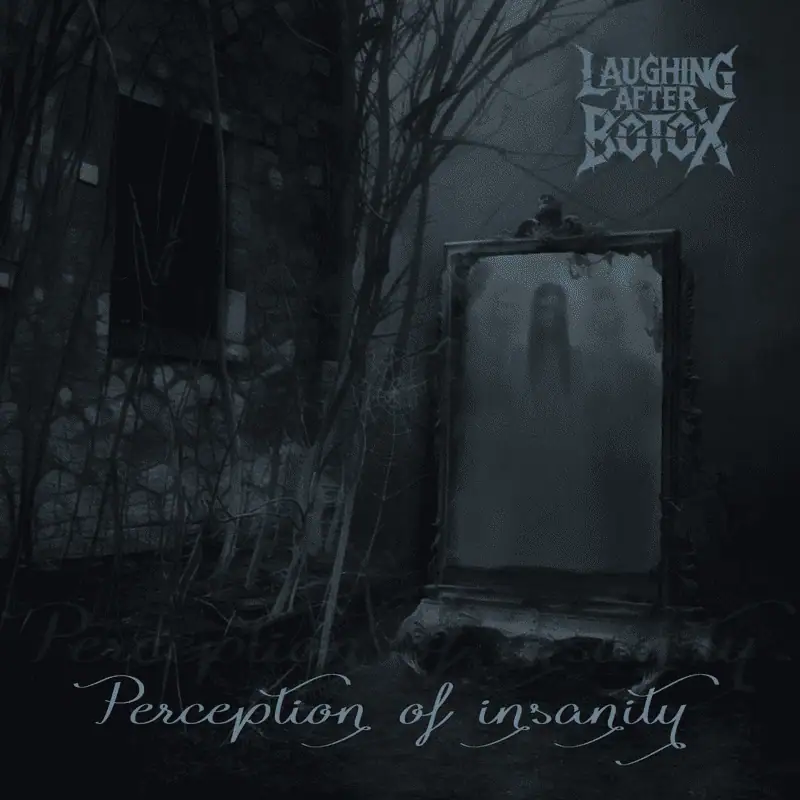
Metalwar: Let’s move on to your debut release. A few weeks ago you released your first EP, “Perception of Insanity”. Is it a concept release?
George Theodoropoulos: Yes, although that wasn’t the original plan. We already had several songs written when we realized that three of them were thematically connected and essentially told different chapters of the same story. Once we noticed that connection, we decided to embrace it and develop the concept further, making the songs fit together even more naturally.
The EP revolves around the decisions people make in life—decisions that aren’t necessarily wrong, but can gradually affect their mental state. It’s about how those choices evolve inside someone’s mind until they eventually lead to psychological collapse. In many ways, it’s an internal dialogue between a person and themselves.
Metalwar: How does the songwriting process work within the band?
George Theodoropoulos: Usually someone brings in the initial idea, but from that point onward everyone gets involved. That’s actually my favourite part of being in a band.
I’ll write a riff and already have drums, bass lines and even vocal ideas in my head. Then I send it to the others, and suddenly someone hears something completely different. The drummer might approach the groove from another angle, or someone else will suggest a harmony I never imagined.
At that point it stops being my idea and becomes our idea. I love that process because you’re no longer trying to improve only your own composition—you start building on someone else’s creativity as well.
Sometimes songs begin almost entirely from one person’s composition, while others are born spontaneously during rehearsals or even from random jams. In the end, though, every song passes through everyone’s hands. What matters isn’t who wrote what; it’s what serves the song best.
Metalwar: Walk us through the three songs on the EP. How did each one come together?
George Theodoropoulos: “Laughing After Botox” was actually the very first song I wrote, back when we were preparing for that first show with VOID DROID. Around eighty percent of the original music was mine.
The version people hear today, however, is very different from the original demo. Back then it was basically a collection of ideas stitched together without smooth transitions. As we kept working on it, we restructured the arrangement, added new sections and made the whole composition flow much more naturally.
I also remember someone joking that the song sounded… punk. That really got under my skin! I went back, rewrote several riffs and found inspiration in bands like MALEVOLENCE until the song finally became what it is today.
Metalwar: The second track, “The Grin in My Mirror”, has a noticeably different atmosphere.
George Theodoropoulos: That song was much more of a collective effort. We challenged ourselves to see how heavy we could make a song without relying on extremely low tunings.
The riffs are actually quite simple, but together they create a very powerful atmosphere. Chrysa also brought some strong melodic black metal influences into the song, which gave it that darker yet still very groove-oriented character.
It was also the first song we chose to record because it had the clearest structure. Since it was our first studio experience as a band, we thought it would be the safest place to start.
Metalwar: And what about “Fragments of Lost Awareness”?
George Theodoropoulos: That was definitely the most demanding piece on the EP.
It started as an idea we developed together during rehearsals, but eventually I took it home and continued working on its core structure. Whenever I write music, I want every riff to be able to stand on its own. Even without drums or vocals, I want someone to hear it and think, “That already tells a story.”
That philosophy made this song particularly difficult because, once the guitars were finished, every additional instrument had to complement the existing narrative instead of distracting from it.
The vocals were probably the biggest challenge. They needed to sit prominently in the mix without covering the guitars, while at the same time the guitars couldn’t overpower the vocal melodies. Finding that balance took a lot of experimentation.
In the end, though, I think it became the song that best represents who we are as a band.
Metalwar: You come from Larssa rather than Athens, where most of the country’s metal scene is concentrated. How difficult is it for a young band from the Greek provinces to take the next step?
George Theodoropoulos: To be honest, things developed much more smoothly than I expected in Larisa. We played several live shows before we had even released any music, and we quickly established ourselves within the local scene.
We’ve also earned the trust of Skyland, which is the venue where most of the city’s metal concerts take place, and that has helped us tremendously.
The real challenge begins when you try to expand beyond your hometown. In Athens or Thessaloniki, the first question promoters usually ask is, “How many people can you bring?” That’s perfectly understandable—concerts have to be financially sustainable—but there’s often a certain hesitation when it comes to bands from outside the major cities.
I think local support becomes even more important at that stage. I remember when I played with FADING ECHOES in Athens during the Rockwave Festival competition. There was also a band from Cyprus on the bill, and it was impressive to see how strongly the Cypriot community living in Athens supported them. That’s something every regional scene could benefit from.
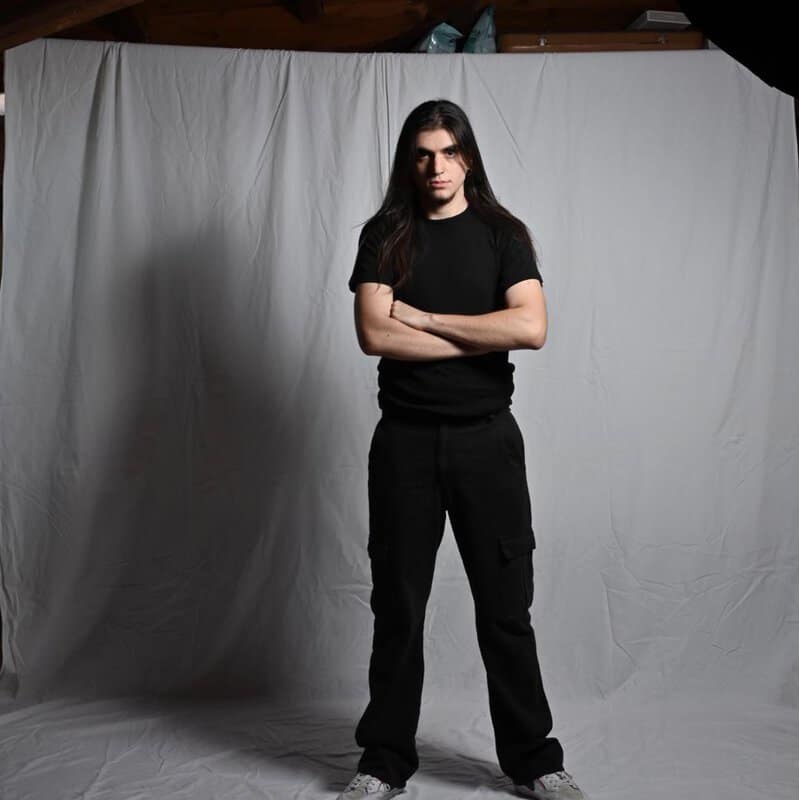
Metalwar: Besides performing with your bands, you’re also a professional guitar teacher. That’s your full-time occupation, which isn’t something you see very often in the metal world. How did that journey begin?
George Theodoropoulos: A lot of musicians see teaching as a second choice. If you can make a living solely from performing, that’s obviously the dream.
But I realised very early on that teaching was something I genuinely enjoyed.
I’ve played in bars and cover gigs before, but personally I never found much satisfaction in playing music simply to earn money. There’s absolutely nothing wrong with it, but for me it felt like music was losing part of its meaning when it became nothing more than a job.
Teaching is different. It constantly pushes me to improve because you can’t teach if you stop learning yourself. Every student forces you to organise your knowledge better, to explain ideas more clearly, and in the process you become a better musician too.
Metalwar: Were you confident when you first started teaching?
George Theodoropoulos: Not at all. I studied music in Corfu, and when I returned to Larisa I was offered a teaching position at a conservatory. Honestly, I didn’t feel ready.
I kept thinking about my own guitar teacher and comparing myself to him. His level of experience seemed so overwhelming that it felt strange imagining myself standing in front of students.
Fortunately, that insecurity didn’t last very long.
At some point I realised it would be a mistake to reject such an opportunity simply because I was afraid. My entire life already revolved around the guitar—I went to work carrying a guitar case, came home with it, and spent the rest of the day playing. Everything simply developed naturally from there.
Today music is my profession. It’s certainly not a luxurious lifestyle, but I can support myself doing something I truly love. And whatever I earn usually goes straight back into music—better equipment, lessons, books and continuing education. It’s an investment in myself.
Metalwar: The last time we spoke, you mentioned that you’d been considering continuing your studies abroad. Is that still part of your plans?
George Theodoropoulos: Very much so.
For me, it’s less about working abroad and more about continuing my education and personal development. Of course, If I could combine both, i wouldn’t say no!
I believe that whenever you become too comfortable, that’s exactly the moment you should challenge yourself. I want to experience different educational systems, meet new musicians and expose myself to different ways of thinking about music.
That’s how you keep evolving.
Metalwar: A more experienced musician once told me that today’s young guitarists have reached a technical level that previous generations couldn’t even imagine at the same age. As someone who teaches younger players every day, do you agree?
George Theodoropoulos: Absolutely.
I have students who are only fourteen years old and can already play things that took me many more years to achieve.
The biggest reason is access to information. Today, a young musician can spend hours learning from world-class guitarists through YouTube, Instagram or TikTok. The amount of educational material available online is practically limitless.
Of course, that doesn’t mean everything suddenly becomes easy. Talent, discipline and consistent practice are still essential. But the knowledge itself is now available in ways that were simply unimaginable twenty years ago.
Metalwar: On the other hand, social media also has its downsides. Do you think it can negatively affect creativity?
George Theodoropoulos: To some extent, yes. The internet gives us incredible access to information, but it also trains us to consume everything very quickly and often quite superficially.
In fifteen seconds you might discover a technique that completely changes the way you play guitar. But in those same fifteen seconds you might also convince yourself that you’ve experienced an entire song when, in reality, you’ve only heard a tiny fragment of it.
The technical level of musicians continues to rise every year. Where I think the real challenge lies today is songwriting.
For me, songwriting is all about interaction. I can write ten riffs on my own, but I don’t believe that’s enough to create a truly great song.
The real magic happens when everyone contributes their ideas. That’s when something emerges that none of us could have written individually.
Nowadays it’s common to see musicians composing everything alone, using drum machines, virtual instruments and online collaborations. The final product may sound technically flawless, but quite often it lacks the human interaction that gives music its personality.
Metalwar: Artificial intelligence is becoming an increasingly important part of music production. What’s your opinion on AI?
George Theodoropoulos: I think AI can be an excellent tool, as long as it’s used as a tool—not as a replacement for creativity.
For example, we used AI during the artwork process simply to provide our graphic designer with a visual reference for the overall direction we had in mind. From that point on, however, the artwork itself was created by a human artist.
That’s how I believe AI should be used. It should help you communicate an idea more effectively or speed up part of the creative process—not replace the creative process itself.
At the end of the day, technology should serve the artist, not the other way around.
Metalwar: What about streaming platforms? Do you think they’ve changed people’s relationship with music?
George Theodoropoulos: Definitely. I’m part of the generation that grew up with Spotify and Apple Music, so I fully appreciate how easy it has become to discover and listen to music.
At the same time, though, I still love physical releases. There’s something special about buying a CD, opening the booklet, reading the lyrics and credits, and experiencing an album as a complete piece of work rather than just another playlist.
That’s why “Perception of Insanity” will also be released in a physical format. We want the people who genuinely connect with our music to have something tangible that they can actually hold in their hands.
For me, that’s still part of what makes music meaningful.
Metalwar: Finally, what’s next for LAUGHING AFTER BOTOX?
George Theodoropoulos: Right now we’re focusing on booking more live shows. There are a few discussions already taking place, but nothing has been finalized yet, so it’s still too early to announce anything.
As far as new material is concerned, we’re actually much further ahead than people might expect. Most of the songs for our next release have already been written, and several of them are part of our live set.
The biggest challenge now isn’t the songwriting—it’s finding the right circumstances, and of course the necessary budget, to record everything exactly the way we envision it.
Metalwar: George, thank you very much for your time. We wish you and LAUGHING AFTER BOTOX all the best, and we hope you achieve everything you’ve set out to do.
George Theodoropoulos: Thank you very much! It was a pleasure talking with you. I really appreciate the support, and hopefully we’ll see everyone at one of our upcoming shows.
Interview – Text: Kostas Boudoukos


No comments yet. Be the first to comment!