
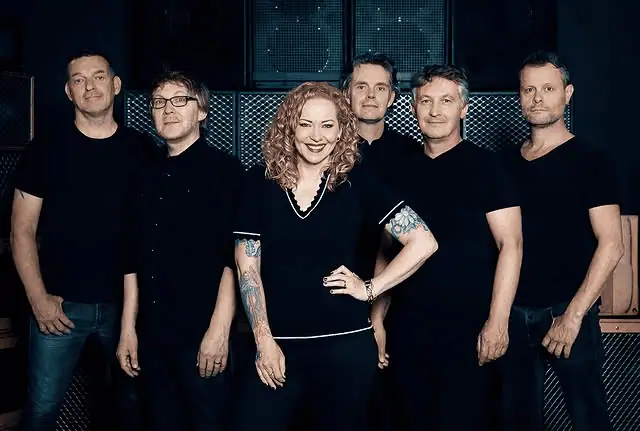
There are bands that find comfort in the safety of their success, and there are bands that treat music as a living, ever-evolving organism. The Gathering undoubtedly belong to the latter category.
From their dark doom/death roots in the early 1990s to their defining reinvention of atmospheric metal and their complete transition into trip rock, progressive rock, and shoegaze, their journey stands as one of the most fascinating musical evolutions in European rock and metal.
The Early Years: Doom/Death Foundations and Always… (1989–1994)
The story began in 1989 in Oss, the Netherlands, when brothers Hans Rutten (drums) and René Rutten (guitars), together with Frank Boeijen (keyboards), formed what would become one of the most influential atmospheric bands of their generation.
With the release of their debut album, Always… (1992), The Gathering introduced themselves as one of the most promising acts in the emerging atmospheric doom/death metal scene.
The combination of Bart Smits’ deep growls with Marike Groot’s ethereal clean vocals, supported by an extensive use of keyboards, laid the foundation for what would later become known as the “beauty and the beast” vocal style. Despite the lineup changes that followed during Almost a Dance (1993), the band was still searching for the perfect balance—the defining element that would propel them to the next level.
The Anneke van Giersbergen Era: Finding Their Identity with Mandylion (1995–2007)
In 1994, the arrival of a young singer named Anneke van Giersbergen would forever change the history of The Gathering—and, arguably, atmospheric metal itself.
The release of Mandylion in 1995 struck like lightning. Songs such as “Strange Machines” and “In Motion #1” were not merely successful—they defined an entire generation of atmospheric metal. Anneke’s voice, rich in emotion, range, and unmistakable character, blended perfectly with the heavy yet deeply melodic guitar work of the Rutten brothers.
Rather than repeating the formula that made Mandylion such a landmark, The Gathering chose evolution.
Nighttime Birds (1997) became the natural and more mature continuation of Mandylion, featuring timeless classics such as the title track and “On Most Surfaces.”
How to Measure a Planet? (1999) marked the band’s boldest artistic turning point. This ambitious double album abandoned traditional metal conventions in favor of space rock, trip-hop, electronic textures, and shoegaze influences.
if_then_else (2000), Souvenirs (2003), and Home (2006) further established what many fans came to describe as the band’s signature “trip rock” sound—deeply introspective compositions enriched by electronics, cinematic atmospheres, and remarkable emotional maturity.
In 2007, Anneke’s departure marked the end of an extraordinary era—but not the end of The Gathering.
A New Chapter with Silje Wergeland (2009–Present)
Many believed The Gathering would struggle to survive without the iconic voice of Anneke van Giersbergen. The answer came in 2009 with the arrival of Norwegian vocalist Silje Wergeland (formerly of Octavia Sperati).
With The West Pole (2009) and Disclosure (2012), the band demonstrated that its songwriting identity remained as strong as ever. Silje brought a fresh vocal approach—delicate yet powerful—while the band ventured even deeper into progressive rock, post-rock, ambient soundscapes, and cinematic textures.
Following a lengthy recording hiatus, Beautiful Distortion (2022) confirmed that The Gathering remain true masters of their craft, capable of creating melancholic and breathtaking sonic landscapes that captivate listeners from the opening note to the final fade.
Why Do The Gathering Remain Unique?
Fearless artistic evolution
Few bands have had the courage to leave behind a highly successful metal sound in order to explore alternative, progressive, and experimental territories. The Gathering have always chosen artistic growth over commercial safety.
Exceptional songwriting
Beyond the various vocalists who have fronted the band throughout the years, the creative core of Hans Rutten, René Rutten, and Frank Boeijen has been responsible for some of the most evocative guitar work, atmospheric arrangements, and keyboard textures ever recorded within the genre.
An enduring legacy
Without The Gathering, today’s female-fronted metal scene—and the seamless fusion of rock with ambient and electronic music—would likely look very different. Their influence extends far beyond metal, inspiring countless artists across alternative, progressive, post-rock, and atmospheric music.
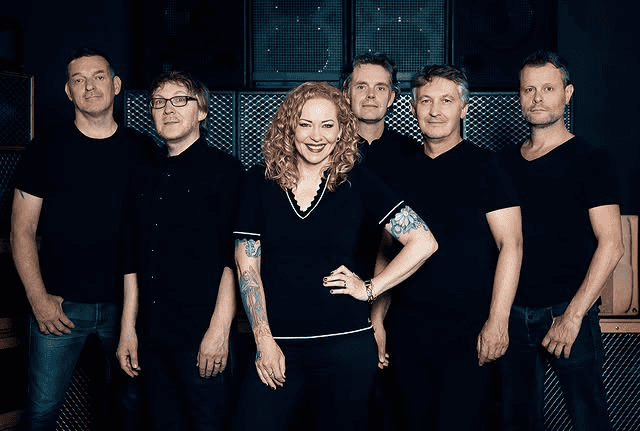
The Gathering are far more than a band.
They are an ongoing journey of artistic exploration, emotional honesty, and sonic beauty—a rare example of musicians who have never stopped evolving while remaining unmistakably themselves.


No comments yet. Be the first to comment!