
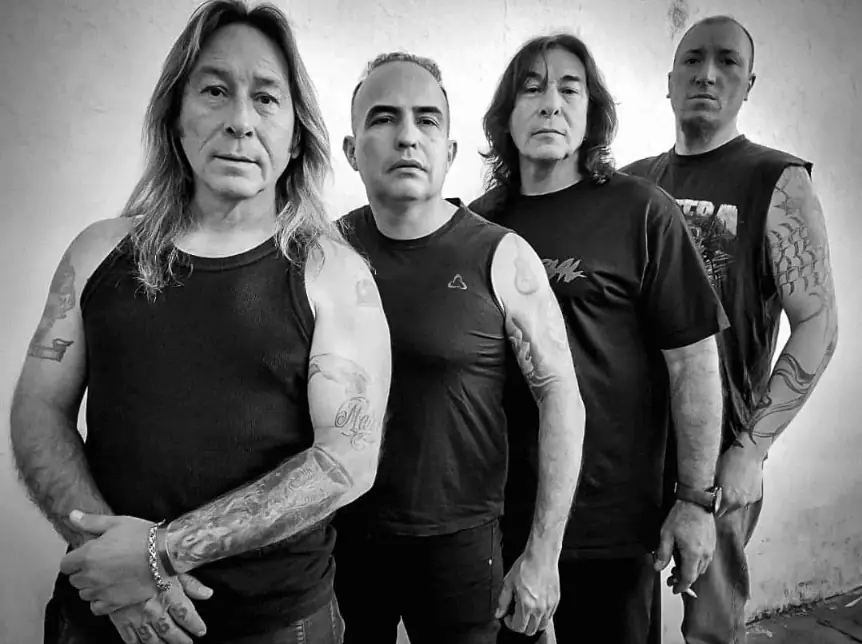
In the deepest alleyways of Buenos Aires, where Heavy Metal is not merely music but a daily struggle and a way of survival, one of the purest soldiers of heavy sound in Latin America was born in 1988: Vorax.
Led by brothers Rubén and Walter Martínez, the band forged what in Argentina is proudly known as “Metal Pesado” (Heavy Metal). Through cult albums such as Por Sentimiento Pesado and with their close relationship with the legendary Ricardo Iorio as a badge of honor, Vorax refused to compromise, soften their sound, or betray the working class they have always represented through their socially conscious lyrics.
Today, Sound Stories by Jo and metalwar.gr have the unique honor of hosting the band’s frontman and guitarist, Rubén Martínez. In this exclusive and special conversation, we dive into more than 35 years of underground resistance, the groove behind their riffs, and the unwavering passion that continues to keep their flame burning.
Jo: With more than 35 years of uninterrupted activity, Vorax remain battle-ready without ever betraying the heavy sound. If you had to choose just one word to define the fuel that has kept you going with the same intensity since 1988, what would it be, and why?
Rubén: I would define it with the word “perseverance.” That has been the fuel that allowed us to keep going all these years while keeping the dream alive and untouched.
Jo: Your brother Walter on drums and you on vocals and guitar are the very foundation of the band. Argentine metal pesado has a long tradition of blood ties within bands. How has that family bond influenced both your songwriting process and your relationship on and off the stage?
Rubén: Walter and I have been involved in many things together since we were kids, and starting a band was our biggest dream from the moment we discovered the great bands we used to watch on TV music programs.
Jo: It has often been said that metal in Argentina is different from anywhere else in the world; it carries a pesado (heavy) feeling deeply rooted in the reality of the streets. For a fan in Greece or elsewhere in Europe who has never been to Buenos Aires, how would you describe the essence and soul of a Vorax concert?
Rubén: Defining the essence and soul of a Vorax concert is very much like describing almost any concert by Argentine metalheads: it’s incredibly passionate, full of energy, with both the audience and the musicians giving absolutely everything they’ve got.
Jo: Por Sentimiento Pesado is considered a cult gem of the underground scene. Looking back, what do you remember most about the atmosphere during those recording sessions, and how do you feel that album shaped the band’s identity for the decades that followed?
Rubén: I remember that our first album was made on a very limited budget, and we had to record everything as quickly as possible. But that also gave it an authenticity that shines throughout the entire record. Despite the less-than-perfect sound, it captured the band’s true essence extremely well.
Jo: Your lyrics have always carried a strong social message and a spirit of protest. In the face of the political and economic changes of the past decades, do you believe Heavy Metal still remains the most honest tool of resistance for giving a voice to the working class?
Rubén: Yes. In our country, heavy metal has always been, musically speaking, the tool of resistance. We have always placed great importance on the lyrics because they reflected the way we lived: working hard, earning very little, and trying to hold on to the hope that things would eventually change. So that’s exactly what we wrote about.
Jo: Throughout Vorax’s history, you’ve shared the stage with major international and Argentine legends. If you had to single out one live performance—the one you consider the most “sacred” or the most chaotic in the band’s history—which one comes to mind first?
Rubén: There are two shows that left a huge mark on me. One was when we opened for Judas Priest on their very first visit to Argentina because it was an unforgettable concert. I remember we were playing while the members of Judas Priest were standing at the side of the stage applauding us…
Another unforgettable show was when we opened for Almafuerte. That concert led Ricardo Iorio to invite Walter to join his band.
Jo: You had the honor of working and performing alongside the great Ricardo Iorio, a figure who left an indelible mark on Argentine metal. What was the most valuable lesson you learned from him, both musically and personally, and how do you keep his legacy alive today?
Rubén: Playing with Ricardo Iorio was a gift of a lifetime as a musician. Beyond that, we shared many moments together—both wonderful and terrible, haha! It was a tremendous learning experience, and the truth is, we miss him.
Jo: Many metal guitarists focus almost exclusively on speed and technical heaviness, but your riffs have a lot of groove and rawness. Which influences outside of metal helped shape your unique style of playing?
Rubén: When I first started playing, my biggest influences were Brian May, Ace Frehley, and George Harrison. Later on, you keep discovering more guitarists and bands along the way, and that’s how you eventually develop your own style.
Jo: In the age of streaming and social media, where everything is fast and fleeting, Vorax have preserved the classic DIY spirit. How does a legendary underground band adapt to these modern times without losing its mystique?
Rubén: It’s difficult to adapt to today’s new technological trends. That’s why I try to leave those things to other people and focus on the music itself. I think that’s something that happens to all of us who belong to the old school.
Jo: Let’s talk about Gritando Verdades. It’s an album overflowing with strength and honesty. Is there a particular song from that record that was the most difficult to bring to life, either because of its musical complexity or its emotional weight?
Rubén: I wasn’t involved in recording Gritando Verdades. That’s an album by my friends in Horcas.
Jo: The European metal scene often looks primarily toward the Anglo-Saxon market, but whenever people discover Spanish-language metal, they’re captivated by its passion. Have you ever considered crossing the Atlantic and bringing the fire of Vorax to European stages—or perhaps even to Greece?
Rubén: We’ve always dreamed of traveling to Europe, but it’s difficult for us. It would be wonderful to take our music wherever possible. If someone invites us, we’ll be there! Haha!
Jo: If Vorax’s entire discography were a history book of underground resistance, which of your riffs—or which line from your lyrics—would you choose to serve as the perfect foreword to your story?
Rubén: The line I’d choose is:
“In my world, there’s only room for those who walk the straight path; they sold me a postcard from a different place.”
It comes from the song “Cuando mates tus miedos” (“When You Kill Your Fears”).
Interview – text: Joanna Gkona

No comments yet. Be the first to comment!