
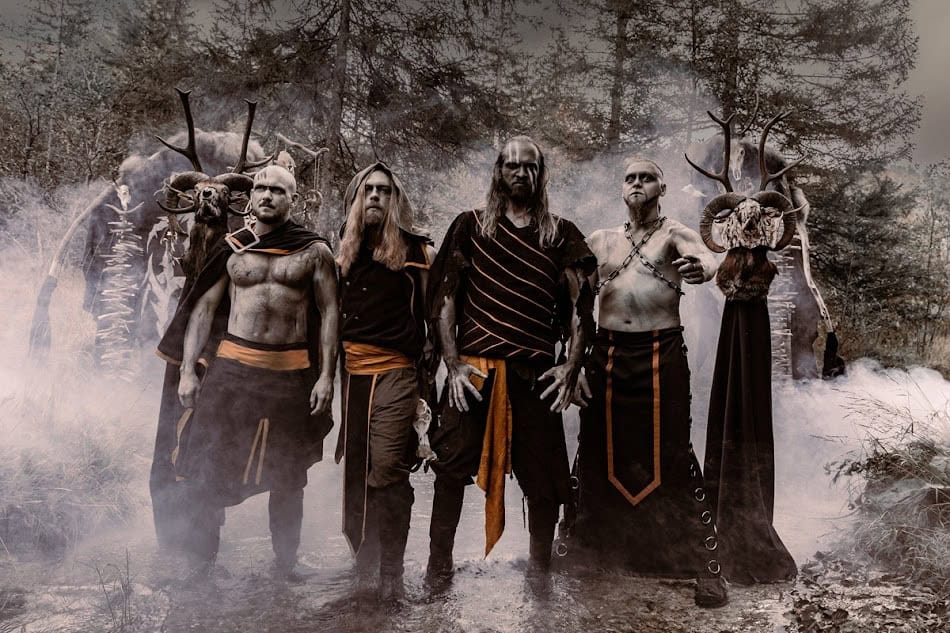
Hailing from the cold landscapes of Austria, Richthammer has been carving a unique path in the underground scene since 2009. Blending the aggression of Death Metal with the eerie atmosphere of Black Metal—and choosing the raw power of the German language—they create a soundscape that is both brutal and melancholic. Today, at Sound Stories by Jo and metalwar.gr, we delve into their dark world to discuss their latest release, ‘Parasitismus’, and the philosophy behind their art.”
Jo: Welcome to Sound Stories by Jo and Metal War! Your sound is a very distinct blend of Death and Black Metal with a haunting atmosphere. How would you describe the core identity of Richthammer to someone entering your musical world for the first time?
Richthammer: Is a symbiotic spectacle of darkness and sonic intensity.
Jo: Your latest single, Parasitismus, released in late 2025, feels like a visceral continuation of your dark path. What is the concept behind this specific track, and how does it represent the current state of the band?
Richthammer: We like to draw inspiration from nature and the small things happening around us—just like with the theme of parasitism, where we took a closer look at the world of parasites. This song is the first single release from our upcoming album.
Jo: One of your trademarks is the use of the German language in your lyrics. Do you feel that German provides a harsher, more “industrial” or “raw” texture to your music that English couldn’t achieve?
Richthammer: Exactly! Aside from the fact that every language carries its own musical character, we enjoy working with our native language. But there will be some songs in English in the future.
Jo: In tracks like Ascheland, the atmosphere is heavy and brooding. How much work goes into building these soundscapes? Is the “mood” of a song as important to you as the riffs themselves?
Richthammer: The atmosphere of our songs is almost more important to us than the riffs—although the riffs obviously influence the mood as well. So it’s hard to clearly separate the two.
Jo: You have remained largely independent throughout your career. Does this “DIY” approach give you the ultimate freedom to explore themes like despair and social decay without any commercial pressure?
Richthammer: Absolutely! That doesn’t mean we’re not looking for suitable partners—especially those who can bring our music to a wider audience. For us, Richthammer is a major art project where the primary focus isn’t commercial success, but the realization of our abstract art.
Jo: How does a Richthammer composition usually begin? Does it start with a specific lyrical concept, or do the aggressive Black Metal screams and Death Metal growls dictate the direction of the music?
Richthammer: For us, the lyrics follow the music—not the other way around. It usually starts with a riff that we build on until we have a rough version of a song. Then we ask ourselves: “What does this composition sound like?”—and begin searching for the right lyrics.
Jo: Looking back at your earlier work like Gemartert geschunden verheert, how do you feel your musicianship has evolved? Are the “demons” you are fighting in your music today different from the ones you faced years ago?
Richthammer: Totally! Back then, we were still very young and first had to learn how to properly play our instruments and understand how music works. A lot of time has passed since then, and the two of us have completed music degrees. Our “demons” today are more about marketing and generating reach.
Jo: Beyond the aggressive exterior, there seems to be a deep, perhaps even philosophical, layer to your lyrics. What are the main themes you find yourself returning to when writing new material?
Richthammer: We’re open to all kinds of topics, but we find our inspiration in the world we live in.
Jo: Your recent releases have a very professional and polished yet “dirty” mix. How important is the choice of studio and producer in capturing the specific “cold” sound of Richthammer?
Richthammer: Over the years, we’ve learned how important the right partner is when it comes to sound. With Victor Bullok (guitarist/producer for Tryptikon, Dark Fortress, and Celtic Frost), we’ve found the right person for our morbid art. And we are really lucky to have him on our site
Jo: How do you translate the dense atmosphere of your records to a live setting? Do you use visual elements or specific stage setups to enhance the listener’s immersion?
Richthammer: If you come to a Richthammer live show, you won’t just experience heavy music, but also an equally intense visual performance. We bring this to life with custom-made props, lighting, and pyrotechnics.
Jo: With the release of your latest singles, is there a full-length album on the way for 2026? What can we expect from Richthammer in the coming months?
Richthammer: The first two singles (“Parasitismus” and “Durch Trieb zur Qual”) are just a small preview of the upcoming album, which is currently scheduled for release in spring 2027. Until then, you’ll be hearing more from us.
Jo: While your roots are firmly in Black/Death metal, do you draw inspiration from other art forms—like literature, cinema, or classical music—to create your “cinematic” darkness?
Richthammer: Of course, we also listen to and appreciate other genres outside of extreme metal. We’re equally interested in other forms of art—and all of that comes together in our songwriting, mostly on a subconscious level.
Interview – Text: Joanna Gonas

No comments yet. Be the first to comment!