
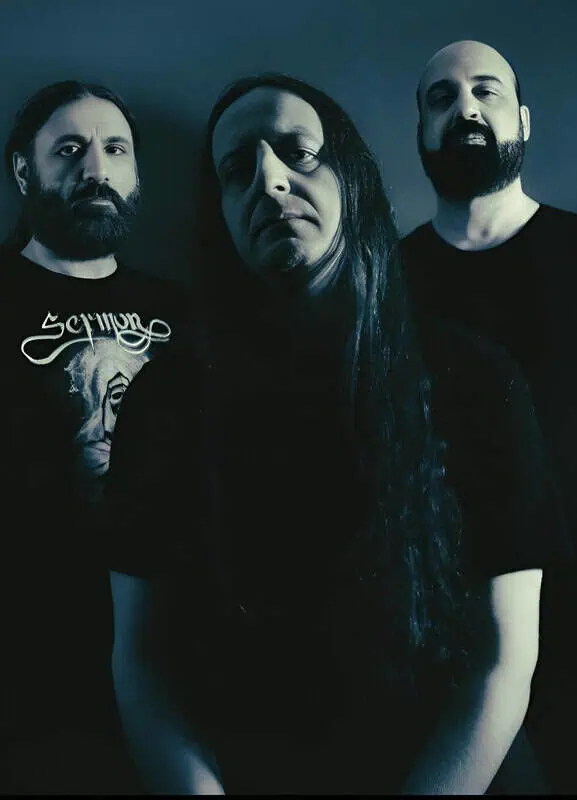
Sermon: The Dark Jewel of İzmir Returns – A Second Exclusive Interview with the Turkish Doom/Death Metallers
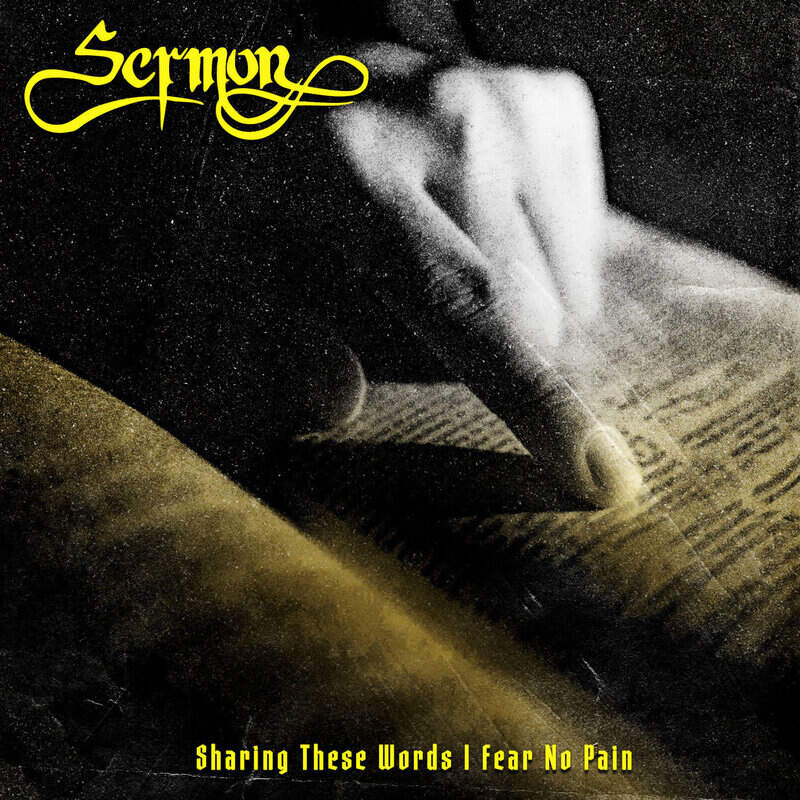
When Sermon rose from their ashes in 2021 after nearly two decades of silence, we knew that the underground scene had reclaimed one of its most authentic atmospheric voices. Their debut full- length, Till Birth Do Us Part, completely captivated us. Today, with the release of their exceptional standalone single, Sharing These Words I Fear No Pain, Sermon proves that their signature heavy melancholy remains as uncompromising and liberating as ever.
It is an immense pleasure and honor to welcome Sermon back to Sound Stories by Jo and metalwar.gr for a second time. In this deep and highly focused conversation, the band unfolds the threads of their history, analyzes the philosophy behind their brand-new material, discusses the struggles and beauty of the Turkish metal scene, and shares their thoughts on the shared musical pulse that unites metalheads in both Greece and Turkey.
Step into their cosmic darkness.
12+1 questions
Part 1: The Resurrection & Sharing These Words I Fear No Pain
Jo: First of all, welcome back to Sound Stories by Jo and metalwar.gr. It is a true pleasure and a big honor to have you with us for a second time, and I want to personally thank you for granting us this second interview. Your musical journey began back in 1997, stopped in 2004, and officially resurfaced in 2021. When you decided to bring the band back to life after almost two decades, did you feel like you were continuing an unfinished book, or starting a completely new story with the same name?
Cem: Thank you so much for your kind words. It is truly special for us to meet with you for the second time. Since our first interview, your support and sincere approach have meant a great deal to us. We would like to thank Sound Stories by Jo and the metalwar.gr team once again; it is a real pleasure to be here again.
We can say it was actually both at the same time. On one hand, there was a sense of continuing an unfinished story, because Sermon was never really a closed chapter for us. But on the other hand, when we got back together in 2021, we didn’t see it as a purely nostalgic return.
After 2004, everyone naturally moved on with their own lives and responsibilities. This period was less about losing motivation and more about the natural flow of life. On top of that, rebuilding the right lineup that truly fit the spirit of Sermon was not easy. That’s why a long silence followed.
Despite that, our connection to music never disappeared. Over the years, we remained inside music both as listeners and as creators. The urge to create was always there—it was just waiting for the right time and the right people to come together.
When we reunited in 2021, we felt that old energy again, but at the same time we also had a much clearer vision. That’s why we see Sermon’s return not as repeating the past, but as carrying what we built before into something more mature, more focused, and more powerful.
The Sermon of today still carries the same spirit, but it stands on a much more grounded musical and conceptual level.
Jo: Your debut full-length album, Till Birth Do Us Part, brought a massive wave of classic, melancholic Doom/Death metal. How difficult was it to translate the raw energy of your 1990s demos, like Cosmic Prisoner and Sea Of Meanings, into a modern studio production without losing that old-school Turkish underground spirit?
Cem: This was actually one of the most important aspects of the album process for us. Because the point was never just to recreate an old sound; it was about translating the spirit, atmosphere, and emotion of that era through today’s possibilities in a faithful way.
The Doom/Death metal mindset we’ve been influenced by since the 90s has never really changed. We still live with that music, and for us the true strength of the genre lies not in technical perfection, but in emotion, dark atmosphere, and sincerity. That’s why during production we avoided anything overly sterile, artificial, or too aligned with modern trends.
At the same time, we never tried to simply replicate the past. All the songs on “Till Birth Do Us Part” are completely new compositions. Our early demos reminded us of our roots, but the goal of the album was not nostalgia—it was to carry the Doom/Death spirit from the past into a more mature, more powerful, and more present-day production approach.
Reuniting after so many years also brought a different depth to the music. Everyone evolved both musically and personally over time, and that naturally reflects in the album. Especially with the contributions of Durmuş and Harun, we managed to reach a very strong creative balance.
What mattered most to us was preserving the organic feel of the music. When someone listens to the album, they should be able to feel both that dark 90s underground atmosphere and understand that this is not a project frozen in time, but a band that is alive today.
Jo: You recently released your brand-new single,Sharing These Words I Fear No Pain;. The title itself feels extremely liberating yet heavy. What is the emotional core behind this specific track, and does it pave the way for a second full-length album?
Cem: First of all, it should be noted that “Sharing These Words I Fear No Pain” was not conceived as part of
an upcoming album, but as a standalone release. However, it still strongly reflects our current musical and conceptual direction.
Musically, compared to our debut album, we aimed to create a denser, darker, and more immersive atmosphere. In this process, we focused not only on heaviness, but also on emotional intensity and the feeling carried by the atmosphere itself.
On the lyrical side, the track does not tell a direct “endtime” story. It is more about symbols, omens, and the awareness of an approaching end. We believe that throughout history—whether in religious texts, apocalyptic narratives, or human storytelling—these recurring signs continue to exist in different forms even today.
But this approach is not fear-based. On the contrary, at a certain level of awareness, it shifts from panic or despair into acceptance and a kind of inner calm. The sense of liberation at the core of the song comes from that state.
Although it may appear very dark on the surface, at its core the track is not only about destruction, but also about awareness, confrontation, and a form of inner freedom.
In that sense, the song also offers important clues about the atmosphere and emotional direction of our future work. The upcoming material will continue to reflect this denser, darker, and deeper approach.
Jo: For the comeback album, you brought Harun Altun (from Forgotten, another legendary Turkish doom band) on vocals. How did this brotherhood form, and what does his brutal vocal delivery add to the specific atmospheric depth of Sermon?
Cem: With Harun joining the band, the alignment we had been searching for for a long time naturally fell into place. For us, this was less of a calculated choice and more of a process where the right people came together at the right time.
We hadn’t met Harun in person before, but we were already familiar with him—both by name and musically—through the scene, especially within the Ankara Doom/Death circle. We also had mutual friends, which helped accelerate the connection. At this point, a crucial role was played by Tolga from our brother band Forgotten. When we spoke to him about our need for a vocalist, he directly pointed us toward Harun and basically made it clear that we shouldn’t even consider other names.
After that, things moved very quickly. Harun was already familiar with Sermon’s history and musical direction. Shortly after our first conversation, he joined the process and immediately started working on vocals and lyrics.
His vocal style is not only technically powerful, but it also brings a very natural darkness and intensity to the atmosphere of the music. We feel that he has taken Sermon’s identity to a deeper, heavier, and a more characterful level.
Because of this, we don’t see Harun’s contribution as just a change in vocals, but as a very essential piece that completes the current spirit of the band.
Part 2: The Turkish Metal Scene Underground Identity
Jo: The Turkish metal scene has a very deep, rich, yet difficult history. Back in the late 90s, you even performed on the state television show Rock Market on TRT. Looking at the scene today, do you think it is easier or harder for a heavy band from İzmir to reach a global audience compared to the tape-trading era?
Cem: This question actually needs to be approached on multiple layers rather than a single answer. In the late ’90s and early 2000s, the communication structure of the Turkish metal scene was completely different. There was a true underground culture built around fanzines, tape trading, and very limited media channels. At that time, appearing on a TRT program like “Rock Market” was not just a matter of visibility for us—it was also a sign that this music was slowly starting to be acknowledged within society. That small opening from the underground to the mainstream was very important in that era.
What really separates those years from today is this feeling: music was something you had to “search for.” Getting an album, discovering a band, or finding a new demo required effort. People didn’t consume music; they actively tried to find it. This created a much smaller but far more committed community within the scene.
Today, the situation is completely different. Thanks to the digital age, it is technically much easier for a band to reach the world. A demo no longer has to physically circulate from hand to hand. However, this accessibility also comes with an overwhelming amount of content. Standing out among so much material has become a matter that goes far beyond just making music.
Another important difference is the way people relate to music itself. In the past, an album could build a connection with the listener for months or even years. Today, attention is much more fragmented and quickly shifts elsewhere. This changes both the impact and the longevity of music.
Because of this, while it may be more accessible today for a metal band from İzmir—or anywhere in Turkey—to reach a global audience in technical terms, it is arguably harder in terms of visibility and sustaining attention. In the past, the barrier was access; today, it is visibility and consistency.
As Sermon, when we look from past to present, we see this clearly: methods have changed, tools have changed, but the struggle to express music has not. It is just taking place in a much more crowded, faster, and more competitive environment today.
Jo: İzmir has always had a different, perhaps more liberal and artistic cultural vibe compared to other regions. Does the unique atmosphere, the history, and the landscape of your hometown play a conscious role when you compose your melancholic melodies?
Cem: We can’t really say this is something fully conscious. When we’re composing, it’s not like we sit down and think, “Let’s write melodies that represent İzmir.” But of course, living in the same cultural atmosphere for many years naturally shapes the way you approach music.
The metal culture that formed in İzmir especially from the 90s onwards was one of the important underground hubs in Turkey. People here didn’t just listen to metal; there was a whole way of life built around it, a shared culture and memory. Fanzines, tape trading, small shows, long conversations about music… All of that became part of how our generation experienced and understood music.
So the melancholy and atmosphere in our music don’t come only from personal emotions, but also from the environment we grew up in. The sea of İzmir, its old streets, its slightly lonely yet at the same time free feeling atmosphere—all of that somehow gets under your skin over time.
But we never use this in a direct, “local identity” way. It’s more that the mood of the environment you live in, combined with years spent inside the underground culture, naturally seeps into the texture of the music.
I think what matters most is exactly that; not trying to deliberately show a city’s influence, but letting it slowly changes something in you over time. And I think traces of that can definitely be heard in Sermon’s music.
Jo: Greek and Turkish metalheads share a very similar temperament when it comes to underground music—we both love pure passion, raw energy, and heavy melancholy. Have you noticed this connection through your interactions with fans or other bands from Greece?
Cem: Yes, we really do feel that connection. Especially when it comes to underground metal culture, The emotional approach of listeners in Turkey and Greece is very similar. In both scenes, people don’t treat music as something you just “listen to” in a casual way—it becomes something more personal, more internal, almost like part of life itself.
This becomes even more obvious in genres like doom/death metal, where melancholy and atmosphere are at the core. We also noticed this very clearly from the feedback we’ve received from Greece. People don’t connect only with the technical side of the music, but with its emotional weight and spirit—and for us, that’s one of the most important things.
We also think the geographical and cultural proximity plays a role. There is a shared sense of melancholy, passion, and emotional intensity around the Mediterranean. Sometimes that comes through in music, sometimes in everyday life, sometimes in the way people perceive things. In the underground scene, it appears in its most unfiltered form.
Over the years, through our interactions with several bands from Greece, we’ve always felt that as well. There has always been a very sincere, mutual support and a real sense of underground solidarity. That means a lot to us, because that’s really what underground culture is about—building connections around shared passion rather than competition.
Both in the past and today, we have great respect for many doom, death, and extreme metal bands coming from Greece. At the same time, the attitude we’ve received from Greek listeners has always felt very natural and close to us.
So for us, the support from Greece has never felt like something coming from a “distant country.” It has always felt more like a natural extension of people speaking the same emotional language.
And I think that’s one of the most beautiful things about underground culture—you can live in different countries, but still form a real bond through the same emotional core.
Part 3: Deep Philosophy Into-The-Point Questions
Jo: According to your biography, your themes deal with Love, Mysticism, Darkness, and the Cosmos. Doom metal often focuses purely on nihilism and death, but you choose to balance it with mysticism. Why is it important for you to look at darkness through a spiritual or cosmic lens?
Cem: For us, darkness has never been only about death, despair, or nihilism. Of course, those feelings exist within doom/death metal, but we’ve always felt that it goes beyond that.
We don’t see doom metal as something purely depressive or destructive. For us, it’s more about the relationship between a human being and existence itself—the self, the unknown, and everything in between. That’s why mystical and cosmic themes naturally became part of our lyrics and overall atmosphere over time.
As the years passed, our lyrics gradually evolved into a more introspective and cosmic direction. The relationship between humanity, nature, consciousness, and the universe has always been something we are drawn to. Alongside that, philosophy, spiritual texts, metaphysical ideas, and the literature we read have all fed into this perspective.
For us, melancholy is also not just personal sadness; it’s more of an existential feeling—like confronting your own limits and your search for meaning.
That’s why we prefer not to spell everything out clearly in the lyrics. We want to leave some space for the listener to find their own meaning. Because some things are not stronger when directly explained, but when they are felt through the atmosphere.
You can also hear this approach on “Till Birth Do Us Part”. It carries themes like cosmic destruction, the revenge of nature, and metaphysical transformation. We also used some lines from Charles Baudelaire; the sense of beauty, decay, and darkness in his poetry has always felt very close to us.
In short, for us darkness is not just an end—it’s a space that turns you inward, makes you think, and sometimes leads you to a different level of awareness. And that is one of the core elements that defines our music.
Jo: The name Sermon implies a message delivered from a higher place or a position of truth. If your music is a sermon to the modern world, what is the number one sin of humanity that you are trying to expose through your riffs?
Cem: If our music is meant to be understood as a “Sermon” to the modern world, then the “sin” we point at is actually disconnection.
We don’t mean this in a moral or religious sense, but in an existential one: a growing separation between human beings and themselves, nature, and the cosmic order they belong to.
Modern life is built on speed, noise, and constant distraction. In such an environment, silence, introspection, and awareness slowly erode. What remains is a fragmented perception of existence—everything is consumed, but very little is truly experienced.
We are not interested in moral judgments or providing ready-made answers. “Sermon” was never meant to be a doctrine or a teaching. It is more like a transmission—something that doesn’t guide you,but rather disturbs and awakens you.
So instead of defining a single “sin,” our music tries to expose this state of alienation itself. Rather than leading the listener to a conclusion, it places them inside a confrontation. In that sense, “Sermon” is not a voice of authority. It is more like an echo of something that has been forgotten—or perhaps deliberately pushed aside.
Jo: Music can be a powerful anchor, but creating deep, emotionally draining doom/death metal year after year can take a toll. Is writing this music a form of therapy that cleanses your soul, or is it a heavy burden you have to carry?
Cem: For us, this process is neither a form of therapy nor a burden we carry.
When we are inside this music, we are not trying to define “what darkness is” from the outside. We are more inside it, following where that atmosphere takes us.
Doom/death metal naturally pulls you into a deeper and more intense space. But we don’t see it as something to analyze from a distance; on the contrary, that’s where creation actually begins.
Most of the time, we don’t start a song from a technical idea, but from a mood or atmosphere. Sometimes a riff appears, but it appears because it already carries a certain emotional state. So the starting point is always the “feeling”.
Because of that, the process is not about release for us; it’s about that feeling taking shape and turning into music. As the song develops, that emotion doesn’t stay fixed—it transforms and becomes something collective.
There is of course a challenging side to it. Being in these emotional spaces constantly can be mentally exhausting. But we don’t experience it as something carried from the outside; rather, it is something shaped from within.
What matters most for us is whether that atmosphere truly reaches the listener. Because we don’t make this music to describe darkness, but to build something within it.
Jo: Many bands from the 90s eventually change their sound to become more commercial or accessible. Sermon, however, remained fiercely loyal to the heavy, atmospheric doom/death blueprint. What is the cost of staying strictly authentic in a music industry that is now driven by TikTok trends and fast-paced algorithms?
Cem: For us, this is not about rejecting trends, but more about choosing where you stand.
Today’s music industry has become extremely fast, consumption-driven, and shaped by algorithms.
In this structure, it is often not depth that matters, but the ability to capture attention in an instant.
We, on the other hand, have always come from a different place. Doom/death metal is not a musical genre that is consumed quickly by nature; it requires time and immersion. And we consciously choose to preserve that approach.
What could be seen as a “cost” might be not reaching wider audiences as quickly, or staying outside of trend cycles. But in return, you preserve the identity, atmosphere, and honesty of the music. For us, that matters much more.
We also don’t see ourselves as completely outside of everything. We live in today’s world, and ignoring the tools of this era is not realistic. But these tools do not define the direction of the music—they only affect its reach and accessibility.
In the end, it’s not about being visible quickly, but about lasting over time. And that naturally comes with a slower, heavier, and more patient process. And that is also reflected in the nature of our music itself—while everything today demands speed, we still choose to stay on the side of music that takes time.
Jo: Having recently celebrated 25 years since the band’s initial formation, what is the most valuable lesson that the underground metal scene has taught you about friendship, patience, and survival?
Cem: I think the most important lesson it has taught us is that real connections and real passion don’t disappear over time.
Because in the underground metal scene, nothing really moves easily. Especially in countries like ours, making music often becomes a matter of patience, sacrifice, and persistence. Over the years we went through lineup changes, took a long break, and our lives moved in different directions. But despite all of that, our connection to music never completely disappeared.
The return of Sermon was actually a result of that. Being able to come back together with the same people after so many years and still feel the same passion was something very meaningful for us. It showed us that if something truly comes from within, time doesn’t erase it—it only changes its form, and it reappears when the moment is right.
The underground scene also taught us patience. Because here, you have to do most things on your own. There are no shortcuts, no instant results, and very little external support. But maybe that’s exactly why the relationships you build become more real—people connect to the music not for gain, but because they truly feel it.
Survival is also part of that. Sometimes you’re not just trying to survive as a band, but as individuals as well. Life’s weight, economic conditions, and the elapse of time all take their toll. But music has always been the place where we could breathe again.
Looking back after 25 years, what remains most valuable is not just albums or shows—it’s still being able to stand alongside people who share the same spirit. Because over time you realize that what keeps the underground scene alive is not just the music, but friendship, loyalty, and the feeling of resisting together.
The +1 Final Question
Jo: If you could send a physical letter back in time to the 1997 version of yourselves, right when you were recording the Cosmic Prisoner demo, what advice would you give to those young kids about the journey that lay ahead?
Cem: I think the first thing we would say to them is: “Not everything will go the way you planned… but that is not a bad thing.”
At that time, we were just young people who wanted to make music and express what we felt inside. We had no idea what kind of path was ahead of us. We didn’t know how much time would change us, how heavy life would become, or how long certain things would actually take.
We would probably tell them to be a bit more patient. Because some things really take years to mature. When you are that young, you want everything to happen immediately, but over time you realize that some pieces of music, some ideas, and even some emotions only find their real form after years have passed.
Another piece of advice would be: Don’t compare yourselves too much to other bands or to the trends of the time. Because the most the lasting thing is finding your own voice. Looking back today, we can see that this is what has kept us going all this time.
But perhaps the most important line would be: “One day you will go through a long silence. At times, you will even think everything is completely over. But if that bond inside you is real, music will somehow find you again.”
Because our story has been very much about that. Years passed, our lives changed, people moved in different directions… but the connection we had with music never completely disappeared. The return of Sermon was actually proof of that.
I think if our younger selves had heard this, they would have been a bit surprised… but at the same time, they would have found even more strength to keep going.
(JOANNA: Special thanks to you and Metalwar.GR We would like to thank Jo and the Metalwar team for this deep and sincere interview. The questions gave us the space to express not only our music, but also the journey that has taken
shape over the years and the spirit we carry with it.
The support and closeness we have felt from the Greek underground scene over the years has been truly meaningful to us. We hope that in the near future we will have the chance to share this musical and emotional atmosphere in Greece.)
This second meeting with Sermon leaves a profound, melancholic aftertaste, proving once again that authentic Doom/Death metal knows no borders. Sharing These Words I Fear No Pain marks yet another powerful milestone in a journey driven by patience, faith, and absolute dedication to the extreme underground.
We would like to express our warmest thanks to the members of Sermon for their valuable time, their deep honesty, and for trusting us with their thoughts once again. We wish them the absolute best in their future studio steps and truly hope to witness their heavy ritual live on Greek soil soon.
Until then, stay tuned to Sound Stories by Jo and metalwar.gr for more deep underground stories.

No comments yet. Be the first to comment!